Lovable.dev Review: From Prompt to Production — What Product Teams Should Know
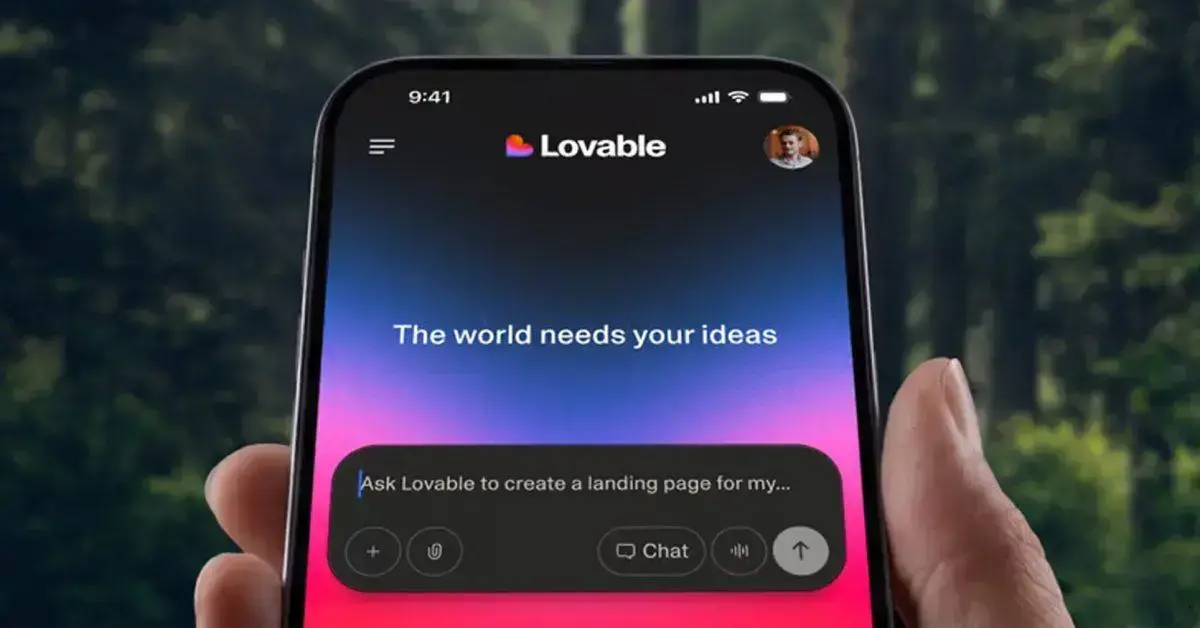
Lovable.dev has moved well past its early days as a prompt-to-React generator. Describe an idea in plain language and it builds, hosts and helps you run the software end to end.
Every new project gets Lovable Cloud, a built-in backend that provisions the database, authentication, storage and edge functions automatically, with the option to connect your own Supabase project instead. Add native GitHub sync, connectors, and built-in payments, and Lovable looks less like a coding shortcut and more like an end-to-end product platform.
Inside This Review
1. Key Features
Lovable stands out from UI-only generators because it takes a project from the first prompt to a running, hosted product.
Text to Full-Stack
Turn a prompt into a working app built on React, Tailwind CSS and shadcn/ui components, generated in real time as you describe what you want.
Lovable Cloud Built In
Every project gets a backend with database, authentication, storage and edge functions — no separate account needed unless you want one.
Two-Way GitHub Sync
Push code to your own repository, edit it in your IDE, and sync changes back. It fits real developer workflows.
Visual editing: Click any element in the preview — a button, a header — and ask for changes to just that component. It feels like editing a design file, but the output is code.
Beyond the editor: Connectors to your existing stack, built-in payments, SEO settings and custom domains (on paid plans) cover much of what used to need separate tools.
2. Pros and Cons of Lovable
The Highlights
- Speed to a working version: For straightforward CRUD apps, a clickable, hosted first version in a single working session is realistic.
- Professional UI by default: Modern standards (shadcn/ui and Tailwind) mean apps look polished without design work.
- Backend with zero setup: Lovable Cloud gives you database, auth and storage on day one.
- No lock-in: You own the code, can export it to GitHub, and can cancel any time.
- Priced by usage, not seats: Plans allow unlimited collaborators who share one credit balance.
The Limitations
- Debugging loops: The AI can get stuck repeatedly fixing the same bug, consuming credits.
- Running costs are now credits too: Hosting and in-app AI features draw from the same balance as building.
- Variable credit cost: A styling tweak and a new feature don't cost the same, so budgets need watching.
- Complexity ceiling: Excellent for CRUD apps; highly custom backend logic still needs an engineer.
- Choose your backend early: Decide between Lovable Cloud and your own Supabase project up front — check the docs before switching later.
3. Lovable Pricing: Plans and Credits
Lovable uses a shared workspace credit balance rather than per-seat pricing. Every prompt that plans, generates or edits code uses credits, scaled to the complexity of the request. Paid plans let you pick a higher credit tier, unused monthly credits roll over while your subscription is active, and annual billing lowers the monthly rate.
| Plan | Monthly Cost | Best For | Key Features & Limits |
|---|---|---|---|
| Free | $0 | Testing an idea | 5 build credits a day, capped at 30 a month (daily credits don't roll over). Private projects, unlimited collaborators, publish to a lovable.app subdomain. |
| Pro | From $25/mo ($21/mo billed annually) | Solo builders and freelancers | 100 monthly credits to start (scalable), credit rollover, top-ups, custom domains, remove the Lovable badge. |
| Business | From $50/mo ($42/mo billed annually) | Teams | 100 monthly credits to start, plus SSO, role-based access, security center, team workspace and a training-data opt-out. |
| Enterprise | Custom | Larger organisations | Volume pricing, dedicated support and advanced security and compliance controls. |
4. The Real Monthly Cost: Building + Running
Lovable now meters three things from the same credit balance: building your app (every prompt), running it (database, storage and networking), and AI features your app calls when people use it. Each plan includes free grants — daily build grants and monthly Cloud and AI grants — that are used before your plan credits.
What this means: the plan price is your floor, not your bill. An app with real traffic or in-app AI features will draw on your balance even in months you don't build anything. Watch Settings → Plans & credit usage for the first few weeks after launch.
5. The Product Owner's Lens
Lovable is superb for the part of product work where speed matters most: discovery. Putting a working prototype in front of five real users beats a week of debating a PRD.
The risk is the reverse — a prototype that quietly becomes the product. The code works, so nobody reviews the auth rules, the data model or the edge cases. AI moves the constraint from writing code to verifying it; the tool supplies capacity, but the accountability for what ships stays with the team.
One practical tip: because running costs now come out of credits, the Product Owner effectively owns an infrastructure budget line. Make it visible in your Sprint Review alongside the value delivered.
6. Lovable Alternatives: What Else Is Out There?
- Emergent AI: A multi-agent builder that tends to produce stronger backend logic, at the cost of higher credit consumption. Read our Emergent review.
- Bolt.new: The closest competitor. Runs the full development environment in the browser and can also connect to your own Supabase organisation.
- Cursor: The best choice if you are already a developer. It won't build a whole app for you in one go, but it excels at maintaining and extending large codebases.
- v0 by Vercel: Excellent for generating UI components, with a narrower focus than Lovable's build-host-run platform.
Frequently Asked Questions
What is the difference between Lovable and Cursor?
Lovable is an AI builder that creates and hosts a whole application from a prompt. Cursor is an AI-assisted code editor that helps developers write and maintain code inside an existing project. Lovable builds the house; Cursor helps you renovate the kitchen.
Does Lovable have a free plan?
Yes. The Free plan includes 5 build credits a day, capped at 30 a month, with private projects, unlimited collaborators and publishing to a lovable.app subdomain. No credit card is required.
Can I host Lovable apps on my own domain?
Yes. Paid plans let you connect a custom domain. Because Lovable syncs with GitHub, you can also deploy the code to any host that supports React apps.
How do Lovable Cloud and Supabase fit together?
By default every project uses Lovable Cloud, which creates tables, authentication and storage automatically when you ask for features like user login. If you would rather own the backend directly, you can connect your own Supabase project instead — decide early, because moving between the two later takes work.
Do I own the code Lovable generates?
Yes. Two-way GitHub sync lets you push the code to your own repository and keep working on it after you cancel.
🔗 Official Sources
Pricing and plan details were checked against the vendor's public pricing and help pages in September 2026. Vendors change plans often — confirm on the official pricing page before you buy.
Related Tool Reviews
Ready to Build Your App?
Test one real idea on the free plan, put it in front of users, and upgrade only when the credit meter says you need to.
Try Lovable Free