Why AI-Native Teams Kill the Relay-Race Workflow
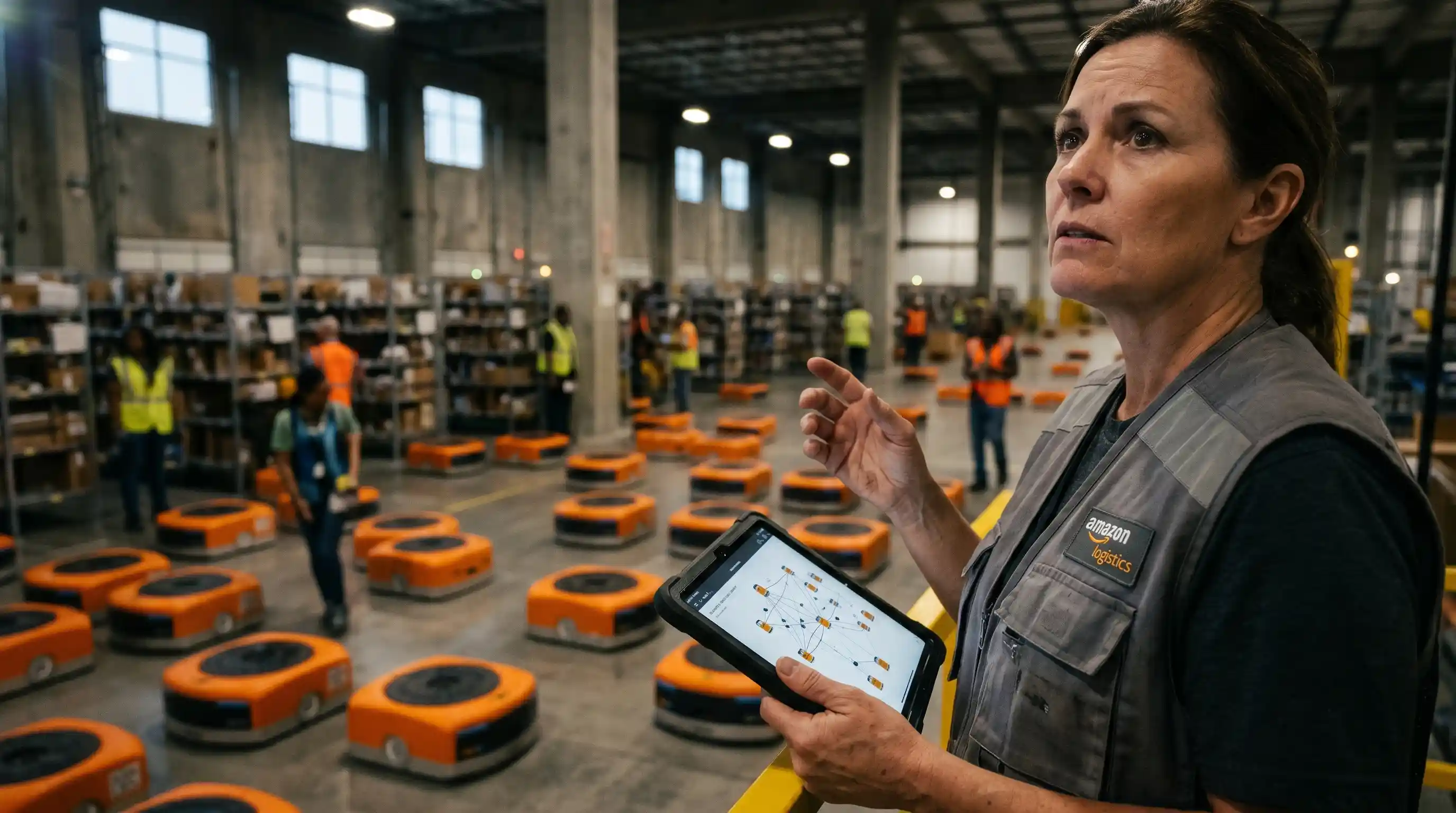
- Eliminating Latency: Discover how unified human-agent loops permanently collapse the multi-stage sequential software pipeline.
- The Jazz Trio Paradigm: Learn the exact structural configuration of cross-functional, highly leveraged product cells.
- System Bottlenecks: Identify the core structural breaking points where unmanaged AI output causes quality and velocity degradation.
- Resource Evolution: Understand why evaluating automated system logic replaces tracking traditional developer story points.
The AI-native product team operating model swaps the relay-race handoff for a human-plus-agent loop. If you are still running standard sprint ceremonies where tasks crawl sequentially from research to design, engineering, and QA, your organizational structure is creating unmanageable latency.
The fastest-scaling product organizations have abandoned traditional sequential delivery models entirely. To remain competitive in 2026, you must dismantle these friction-filled legacy pipelines and reconstruct your organization around the parent AI-native product leader operating model.
The modern market does not reward teams that optimize for departmental handoffs; it rewards teams that consolidate execution into synchronized parallel loops.
We will break down exactly how this structural shift functions, where the continuous collaboration engine breaks down, and how to maintain elite execution standards.
The Demise of the Traditional Sequential Handoff
The traditional software development pipeline operates exactly like a classic relay race. User researchers package insights and hand them to a designer; the designer finishes wireframes and hands them to a product manager; the PM drafts detailed specifications to hand to an engineer, who eventually throws the code over the wall to QA.
Every single handoff point represents an expensive organizational bottleneck characterized by context loss, misaligned interpretations, and severe scheduling delays.
In a rapid market, this slow progression makes it impossible to maintain a competitive product lifecycle. The AI-native team format eradicates this fragmentation by running execution layers concurrently, compressing multi-week planning phases into real-time operational alignment.
Inside the 'Jazz Trio' Team Structure
Rather than scaling large, sprawling departments divided by functional specialties, innovative tech organizations are shifting toward a highly concentrated configuration known as the "jazz trio" model.
This model relies on three core pillars: an elite product lead, a highly technical systems orchestrator, and an automated network of specialized AI agents. This structure works together dynamically rather than following a rigid script, mimicking an improvisational musical trio.
The human operators focus purely on strategic steering, edge-case evaluation, and guardrail configuration, while the synthetic workforce manages the bulk of tactical asset generation, code compilation, and test execution.
How Humans and Agents Share the Same Loop
Operating effectively in this structure requires a deliberate process re-engineering that shifts how day-to-day work is delegated:
- Automated Baseline Synthesis: AI agents ingest raw product telemetry, customer feedback channels, and codebase logs continuously to surface prioritized defect matrices and feature requirements.
- Human Strategic Intent: The product lead reviews the automated telemetry synthesis and injects business logic, market timing context, and high-level strategy constraints.
- Synthetic Execution Waves: Armed with strategic directions, autonomous coding and validation agents simultaneously generate functional architecture, build test scenarios, and write documentation drafts.
- Human Validation Gates: Human engineers and product leads step in to perform complex logic evaluations, risk audits, and final approvals before any deployment occurs.
This collaborative model dramatically accelerates your time-to-market. For a highly practical, granular view of how an individual leader manages their schedule, reviews these synthetic assets, and avoids quality degradation within this dynamic environment, analyze our detailed breakdown of the AI-augmented product lead role.
Where the Loop Breaks: Managing AI-Native Risks
While the velocity gains of an AI-native operating structure are immense, expanding your execution layer through automation introduces a brand-new set of system vulnerabilities.
If you scale your team's throughput without scaling your validation architecture, your delivery loop will break down rapidly under the weight of unmanaged technical debt.
The most dangerous failure mode in this model is "quiet quality decay." This occurs when human operators grow complacent, accepting agent-generated code, documentation, or test suites at face value without executing rigorous verification protocols.
Mitigating System Vulnerabilities and Quality Decay
To maintain a secure and sustainable development cycle, you must build explicit defense layers into your operational loop:
- Enforced Agent Constitutions: Every autonomous agent must operate under explicit permission matrices and mathematical boundaries defining what it can modify and spend.
- Automated Evaluation Pipelines: Implement programmatic scoring frameworks that test agent-generated assets against functional criteria, security baselines, and architectural standards before human review.
- Mandatory Friction Points: Deliberately build fixed human-in-the-loop triggers for high-stakes decisions, privacy compliance checkpoints, and architectural balance evaluations.
Transitioning an entire engineering department away from traditional agile frameworks and into a balanced systems-driven model requires a structured macro-level strategy.
For a broader organizational blueprint detailing corporate leveling adjustments, accountability refactoring, and global team structuring across enterprise divisions, reference the comprehensive guidance established in our definitive product management career guide.
Reconstruct Your Delivery Engine
Maintaining a linear, legacy software pipeline in an automated marketplace is an existential threat to your organization. The traditional relay race creates friction that your product cannot afford.
Break down your siloed departments, equip your senior strategists with autonomous agent networks, and transition your product cells into high-velocity parallel loops before your competitor does.

Frequently Asked Questions (FAQ)
It is an organizational framework that replaces traditional, sequential software development pipelines with centralized human-agent collaboration loops. Teams run execution layers in parallel, utilizing autonomous AI agents for asset generation while human operators focus entirely on strategy, steering, and quality evaluation.
Traditional teams pass work linearly across siloed functional disciplines, creating significant handoff latency. AI-native teams operate concurrently within a shared workspace where agents execute initial asset drafting, research synthesis, and code construction simultaneously under constant human oversight.
The 'jazz trio' model structures a product cell around three components: a product strategist, a technical systems architect, and an interconnected layer of autonomous AI agents. The team operates fluidly in real-time, responding dynamically to data inputs rather than following rigid, multi-week agile sprint scripts.
Agents handle high-volume, repetitive execution tasks—such as initial feature compilation, telemetry analysis, and automated test scenario drafting. Humans act as editors and directors, setting initial guardrails, injecting strategic nuance, and managing final output validation checkpoints.
Yes. Because specialized AI agents absorb the heavy operational workload associated with routine documentation, syntax writing, and baseline quality assurance, a lean, highly senior team can effortlessly deliver the exact same product throughput as a large legacy department.
The team is directed by an advanced product leader who possesses elite system design, risk governance, and evaluation capabilities. Rather than managing individual human schedules or tracking basic ticket velocity, they focus entirely on managing compute budgets, agent permissions, and strategic metrics.
By eliminating the sequential handoff delays, communication misalignment, and staging bottlenecks inherent to traditional software pipelines. Agents generate functional assets instantly, allowing the team to iterate, evaluate, and deploy product capabilities in a continuous parallel loop.
Purely execution-bound, mid-level coordination roles—such as traditional project coordinators, ticket-writing business analysts, and manual script-testing QA professionals—are absorbed by automation. The remaining structure becomes intensely focused on senior-level systems engineering and strategic orchestration.
Quality is maintained by abandoning informal checks and implementing strict, mathematical evaluation rubrics and automated golden testing datasets. No agentic output is allowed to advance to production without passing automated validation layers and a final human approval gate.
The primary risks include "quiet quality decay" from human complacency, runaway compute and token expenditures, and architectural fragmentation from unchecked code generation. Managing these system vulnerabilities requires strict agent constitutions and rigorous governance structures.