Manager of Robots: Leading a Synthetic Workforce
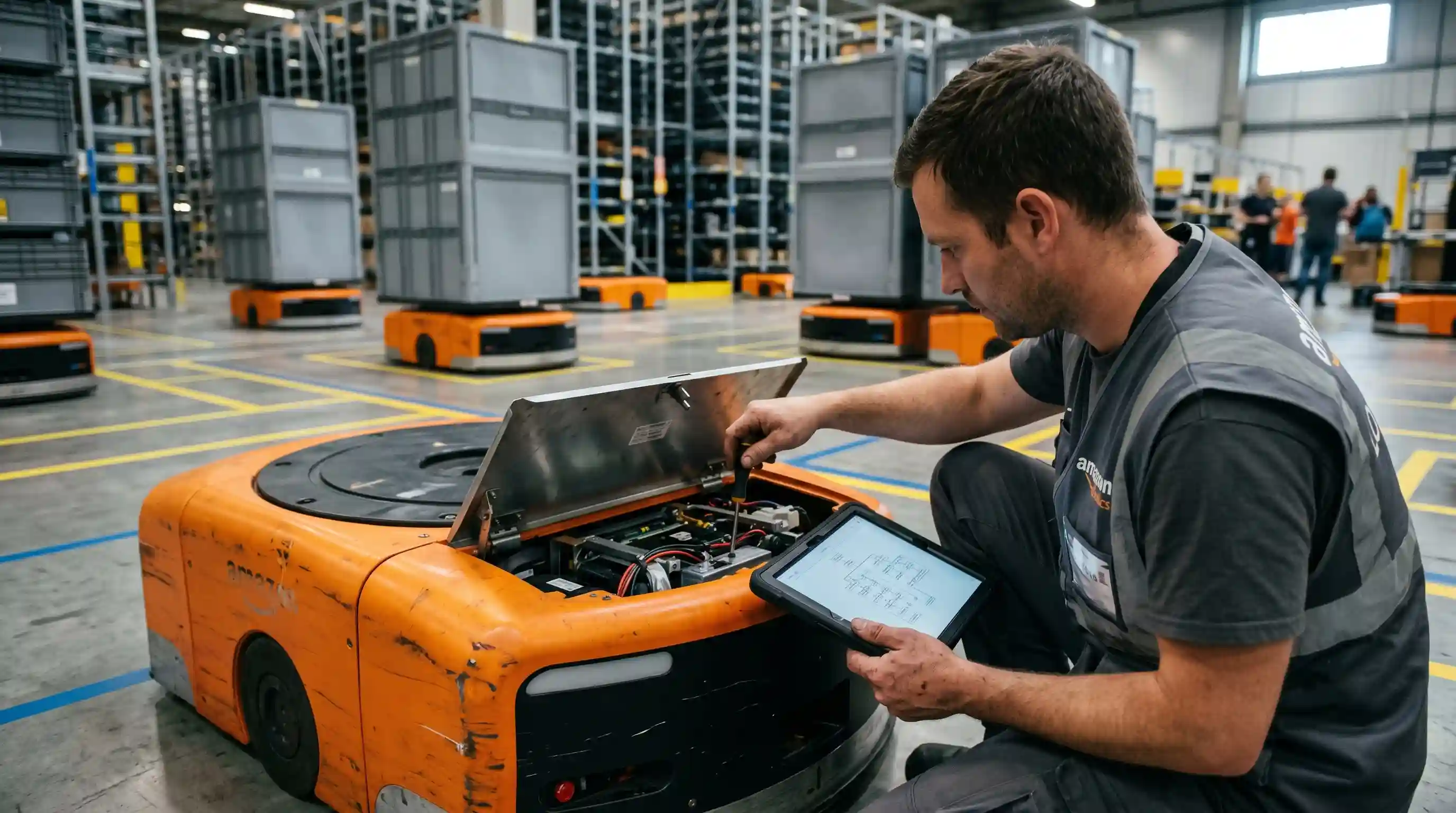
- Compute as a Resource: Discover how the compute allocation PM manages token budgets instead of just engineering hours.
- The Agent Constitution: Learn why synthetic team management requires strict, codified behavioral guardrails.
- Outcome Ownership: Transition from tracking feature delivery to taking absolute accountability for business metrics.
- New Management Instincts: Understand why leading AI agents is fundamentally different from leading human teams.
'Manager of robots' product leadership means allocating compute and owning outcomes, not features.
The operating shift most leaders miss is that the instincts that make someone a good people-manager do not transfer cleanly to directing agents. This is the discipline of management applied entirely to a non-human team.
To survive this career transition, you must fully integrate the AI-native product leader operating model into your daily practice.
Traditional task execution is being absorbed by algorithms. Your new mandate is absolute system governance. We are going to unpack exactly what it takes to stop managing human velocity and start governing synthetic logic.
The Core Shift: Synthetic Team Management
Leading AI agents requires a complete baseline reset for experienced product managers. You are no longer navigating human motivation, burnout, or career development.
Instead, synthetic team management focuses purely on system design, task routing, and continuous evaluation.
Your role is to architect the environment in which these agents operate, ensuring they have the right data and the right constraints.
Unlearning People Management Instincts
The instincts that make someone a good people-manager do not transfer cleanly to directing agents.
Empathy and soft skills, while still crucial for your human counterparts, are useless when dealing with a synthetic workforce. You must replace soft coordination with hard, unyielding system logic.
If you struggle with this pure systems-thinking approach, your skills may align closer to the Product Orchestrator role, which balances managing both humans and agents.
Writing the Agent Constitution
An autonomous agent is a liability if it operates without boundaries.
Product leaders must write an explicit agent constitution before deploying any AI. This is the foundational document that defines what the agent is allowed to do, what tools it can access, and where it must stop and ask for human permission.
It is your ultimate risk mitigation tool.
Defining Guardrails and Constraints
Without an agent constitution, an LLM will confidently execute destructive or expensive actions.
You must engineer safety, compliance, and brand alignment directly into the agent's operational mandate. This means setting strict API limitations, defining acceptable fail-states, and forcing human-in-the-loop checkpoints for high-stakes decisions.
The Compute Allocation PM
In the traditional model, your most scarce resource was human engineering capacity.
Today, a product leader is effectively a compute allocation PM. You must distribute computational power, API access, and token budgets across your synthetic workforce with extreme precision.
You are acting as a financial gatekeeper for machine cognition.
Managing Token Budgets and Unit Economics
Do product leaders allocate compute and token budgets now? Absolutely. Every agentic loop carries a real-time per-session cost.
If you allow agents to run infinite, ungoverned loops, your pilot program will immediately become a financial disaster.
You must track and optimize the unit economics of every synthetic action.
Outcome Ownership Over Feature Output
When your synthetic workforce handles the execution, your value is no longer measured by the volume of features shipped.
What does it mean to own outcomes instead of features? It means taking absolute accountability for whether the product hits its activation, retention, or revenue targets.
This is the ultimate test of the 'manager of robots' shift. You manage the systems that do the work, so you are held entirely responsible for the final result.
For a deeper understanding of how outcome ownership fundamentally changes your leveling and salary potential, consult the definitive Global Product Management Career Guide.
Ready to Architect Your Synthetic Team?
The era of optimizing human agile velocity is ending. Your next career leap depends entirely on your ability to govern autonomous systems at scale.
Stop managing the backlog and start writing your first agent constitution today—because the leaders who master compute allocation will own the future of product delivery.

Frequently Asked Questions (FAQ)
It describes a product leader who directs a synthetic workforce of AI agents. Instead of managing people to ship features, they allocate compute budgets, define systemic guardrails, and take absolute ownership of the final business outcomes delivered.
You manage AI agents through strict system governance and defined constraints. This involves writing explicit agent constitutions, defining API access, setting strict token spend limits, and building rigorous automated evaluation frameworks to continuously monitor the quality of their output.
An agent constitution is the definitive set of behavioral rules and constraints coded into an AI agent. It dictates ethical boundaries, allowed actions, spending limits, and the exact scenarios requiring escalation to a human decision-maker.
Leading AI agents relies entirely on systemic logic, prompt engineering, and mathematical evaluation rather than empathy, career coaching, or emotional intelligence. The instincts that make someone an excellent human people-manager do not transfer to directing synthetic workflows.
Yes, allocating compute and token budgets is now a primary, daily responsibility. Because every autonomous action carries a financial cost, leaders must govern unit economics tightly to prevent runaway computational expenses from destroying the core product profitability.
Owning outcomes means you are judged strictly on business results like revenue or activation, not the volume of artifacts produced. Since agents execute the feature work, your performance is tied exclusively to the strategic success of the product.
You set goals using precise, measurable, and programmatic criteria within their workflow. Unlike humans who can interpret ambiguous strategic intent, agents require mathematical evaluation rubrics, clearly defined end-states, and explicitly structured data inputs to understand and execute their objectives.
Agent teams require strict API rate limits, pre-defined token budgets, automated output evaluation gates, and mandatory human-in-the-loop escalation checkpoints. Without these foundational safeguards in place, autonomous agents pose severe security, compliance, and financial risks to the enterprise.
It is a very real, structural operational shift rapidly occurring in enterprise tech. Organizations are actively restructuring teams, shrinking manual execution headcount, and hiring leaders explicitly capable of directing, governing, and scaling large autonomous synthetic workforces.
Shift your focus entirely from manual execution to system governance. Start by mastering output evaluation frameworks, learning token economics, and practicing how to define strict agent constitutions. Stop optimizing human workflows and start engineering closed-loop agentic systems.