From Execution to Strategy: The Ultimate PM, BA, & PO to Product Manager Transition Guide
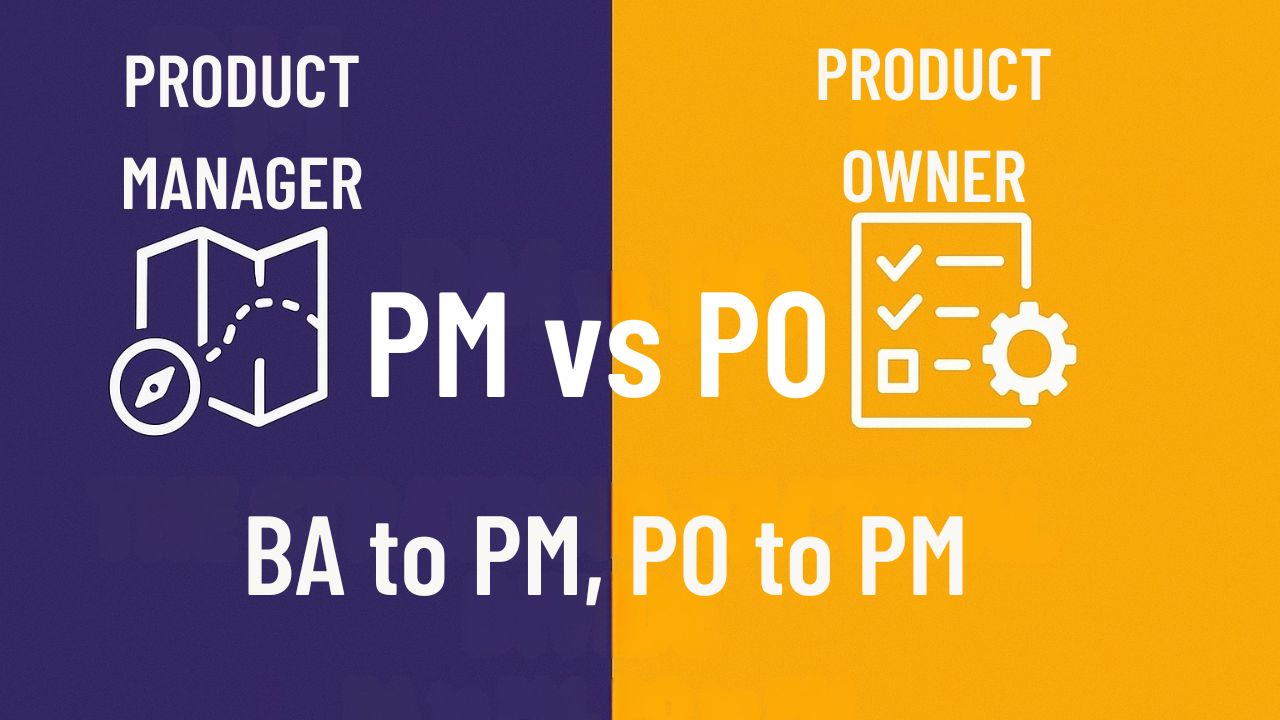
The confusion between the Product Manager vs Product Owner roles is one of the most common friction points in modern tech. A recent study reveals that 67% of organizations struggle with role clarity, leading to misaligned priorities, duplicated efforts, and ultimately, failed product launches. The core of the issue lies in a failure to distinguish between long-term vision and daily execution. We’re going to definitively clarify these roles, explain how they function in a startup context, and settle the debate on who holds ultimate product ownership. For those considering a PM to PdM transition or a full-scale career switch to Product Manager from a different background, understanding this division is your first critical step.
1. Defining the Divide: Strategic Vision vs. Tactical Execution
The core of the PM/PO divide stems from a fundamental distinction: are you managing a Product or a Project? Understanding this helps clarify what the difference is between a Product Owner and a Product Manager. A Product is a living outcome for users that is never truly "finished"—it is the strategic "why". A Project, in contrast, is a time-bound plan to deliver a specific output—the tactical "how". This strategic-tactical divide is the clearest way to understand the two roles. The Product Manager is the strategic visionary responsible for the product's long-term success, while the Product Owner is the tactical executor focused on maximizing value delivery from the development team. In an Agile development environment, this distinction is critical.
PM vs. PO: A Quick Comparison Table
| Product Manager (Strategic) | Product Owner (Tactical) |
|---|---|
| Defines the long-term Product vision | Manages the Product backlog |
| Sets the long-term strategy | Translates strategy into actionable tasks and user stories |
| Conducts market analysis and competitive intelligence | Manages and prioritizes sprint execution |
| Owns product's market performance and profitability (P&L) | Focuses on maximizing value from the development team |
| Responsible for the "Why" behind the product | Responsible for the "How" and "When" of development |
2. The Product Manager: Architect of the "Why" and Strategic Owner
Product Managers are often called "mini-CEOs" because they are involved in so many aspects of a product's journey to market. This title captures their responsibility for the product's overall success, from conception through its entire lifecycle. They are primarily focused outward on the market, the customers, and the product's strategic alignment with business goals.
Core Strategic Responsibilities:
- Product Vision & Strategy: The PM defines the product's long-term vision and strategic direction. They observe market trends, identify new opportunities, and ensure the product aligns with organizational value streams.
- Market & Customer Focus: The PM maintains an external focus, conducting market research, competitive analysis, and customer interviews to gain a deep understanding of user needs and pain points. This insight informs the product roadmap and ensures the team is building something customers will want and pay for.
- Business Acumen & Ownership: Ultimately, the PM is accountable for the product's market success, profitability, and P&L. Their performance is measured by market performance, customer satisfaction, and the product's contribution to the company's bottom line.
3. The Product Owner: Master of the "How" and "When"
The Product Owner role originated from the Scrum framework for Agile development. The PO is a member of the Agile team and serves as the critical link between the high-level product vision and the development team's execution. Their primary function is to represent the interests of the stakeholders and act as the voice of the customer directly to the developers.
Core Tactical Responsibilities:
- Managing the Product Backlog: The PO’s primary responsibility is to create, maintain, and prioritize the product backlog. They transform the PM's high-level vision into detailed user stories and acceptance criteria.
- Sprint Execution: The PO works closely with the delivery team daily to ensure they build the right functionality promptly. By prioritizing the backlog, the PO determines when a feature is ready for a sprint and when it meets the definition of done.
- Team & Quality Focus: The PO is the final decision-maker on whether a feature is complete and ready to be released. They define acceptance criteria and are the go-to person for the development team to clarify requirements.
If you are asking if a Product Owner is a Product Manager, the answer is clearly no. As product expert Melissa Perri states, "Product owner is a role you play on a Scrum team. Product manager is the job". The PO is a specific, functional role focused on backlog execution within the Scrum methodology, while the PM is a broader function responsible for overall business success.
4. Career Path Deep Dive: Leveraging Your Experience for a PM Role
For professionals looking to make a career switch to Product Manager, backgrounds in Project Management, Business Analysis, and Product Ownership offer a unique, leveraged starting point.
A. Project Manager to Product Manager
If you have experience in Project Management, you already possess crucial skills for the PM role. The key is in understanding the shift from Project Manager vs Product Manager responsibilities:
| Role | Primary Focus | Goal |
|---|---|---|
| Project Manager | Scope, schedule, and budget for a time-bound project. | Manages the delivery of a specific output. |
| Product Manager | Market viability, profitability, and customer value for a perpetual product. | Manages the outcome and its P&L. |
You can leverage your existing skills—stakeholder management, execution discipline, and cross-functional leadership—for the Product Manager prerequisites for Project Managers. The essential shift is from being output-focused (the what) to being outcome-focused (the why and for whom).
B. Business Analyst to Product Manager
A common career path from PM/BA/PO to PM involves the Business Analyst (BA) role. The BA acts as a bridge, analysing and communicating detailed requirements to ensure technical solutions solve business needs. The core path is often: Business Analyst → Product Owner → Product Manager.
The skills needed to switch from BA to Product Manager are already partially developed:
- Elicitation & Documentation: BAs are masters at gathering and documenting requirements (user stories, functional specs).
- Stakeholder Bridging: BAs already connect business strategy to technical execution.
To succeed in your Business Analyst to Product Manager transition, you must deliberately acquire or showcase the following:
- Market & Competitive Analysis: Show your ability to look outside the company for opportunities and competitive threats.
- P&L Acumen: Demonstrate an understanding of business models, pricing, and profitability (P&L ownership).
- Vision & Strategy: Shift your focus from detailing the solution (BA) to defining the market problem (PM).
C. Product Owner to Product Manager
The Product Owner to Product Manager transition is the most direct career switch to Product Manager. You already manage the backlog and execution, so the next logical step is to own the strategy. The challenge is resisting the urge to jump into the backlog every day.
To make this transition, you need to dedicate time to strategic activities:
- Conduct market research and customer interviews.
- Build and maintain the product roadmap.
- Develop a financial forecast or P&L model for your product.

5. The Verdict: Who Holds Ultimate Product Ownership?
While the Product Owner has tactical ownership of the product backlog and its execution, the Product Manager holds ultimate ownership of the product's destiny. This conclusion is justified by the PM's core mandate, which is defined by strategic responsibilities that directly impact a startup's survival and success:
- Long-term Vision: They define the product's path over years, not weeks.
- Market Success: They are accountable for how the product performs against competitors.
- Profitability (P&L): They are responsible for the business outcome.
This concept of "perpetual ownership" means the PM oversees the entire product lifecycle, from ideation to iteration and eventual deprecation, a responsibility that extends far beyond any single project or sprint. In a startup, even if one person wears both hats (the hybrid PM/PO role), the "Product Manager hat" is the one that carries the ultimate strategic ownership and accountability. It is the strategic thinking, market focus, and business responsibility inherent in the PM function that determines whether a product succeeds or fails in the long run. This is why the PM to PdM transition represents a crucial step up in strategic authority.
(This article is part of our comprehensive Product Management Career Guide.)
Frequently Asked Questions (FAQ) on PM/PO Roles and Career Paths
What is the difference between a Product Owner and a Product Manager?
The difference lies primarily in focus, which is often a source of friction in modern tech: the Product Manager (PM) is strategic, defining the long-term 'Why' behind the product, while the Product Owner (PO) is tactical, focusing on the 'How' and 'When' of development.
- PM Focus: Product vision, long-term strategy, and owning the product's market performance and profitability (P&L).
- PO Focus: Managing and prioritizing the Product backlog, translating strategy into actionable tasks, and maximizing value delivery from the development team.
Is a Product Owner a Product Manager?
No, the roles are distinct, though related. Product Owner (PO) is a role you play on a Scrum team, focused specifically on backlog execution within the Scrum methodology. Product Manager (PM) is the overarching job function responsible for the product's overall business success, regardless of the development framework used.
How does the Business Analyst (BA) role fit into the PM/PO structure?
The Business Analyst (BA) acts as a bridge, analysing and communicating detailed requirements to ensure that technical solutions solve business needs. The BA's skills in elicitation, documentation, and stakeholder bridging are foundational. A common career path from PM/BA/PO to PM involves the following progression: Business Analyst → Product Owner → Product Manager.
What are the key differences in Project Manager vs Product Manager responsibilities?
The core distinction is between managing a Project (a time-bound output) and a Product (a perpetual outcome).
- Project Manager: Primary Focus is scope, schedule, and budget for a time-bound project; the goal is managing the delivery of a specific output.
- Product Manager: Primary Focus is market viability, profitability, and customer value for a perpetual product; the goal is managing the outcome and its P&L.
The essential shift for a Project Manager to Product Manager transition is moving from being output-focused (the what) to being outcome-focused (the why and for whom).
What are the Product Manager prerequisites for Project Managers making the switch?
Project Managers already possess crucial, transferable skills like stakeholder management, execution discipline, and cross-functional leadership. To meet the Product Manager prerequisites for Project Managers, you must deliberately showcase or acquire key strategic skills:
- Strategic Vision: Moving beyond the delivery timeline to define the product's long-term path.
- Market Focus: Developing an external perspective by conducting market research and competitive analysis.
- P&L Acumen: Accountability for the product's business success, financial forecast, and market performance.
References and Sources
The insights and data presented in this guide are drawn from a comprehensive analysis of the Product Management career landscape and are supported by industry experts:
- The Product Management Career Guide: The Product Management Career Guide
- Melissa Perri: Product Manager vs. Product Owner: Melissa Perri: Product Manager vs. Product Owner
- The Scrum Guide: The Scrum Guide
- ProductPlan: PM vs. PO Comparison: ProductPlan: PM vs. PO Comparison
- Product School: The Product Book: Product School: The Product Book