« Back to Pillar Page: The Profit Engine
How to Fix SaaS Pricing and Billing to Grow Faster
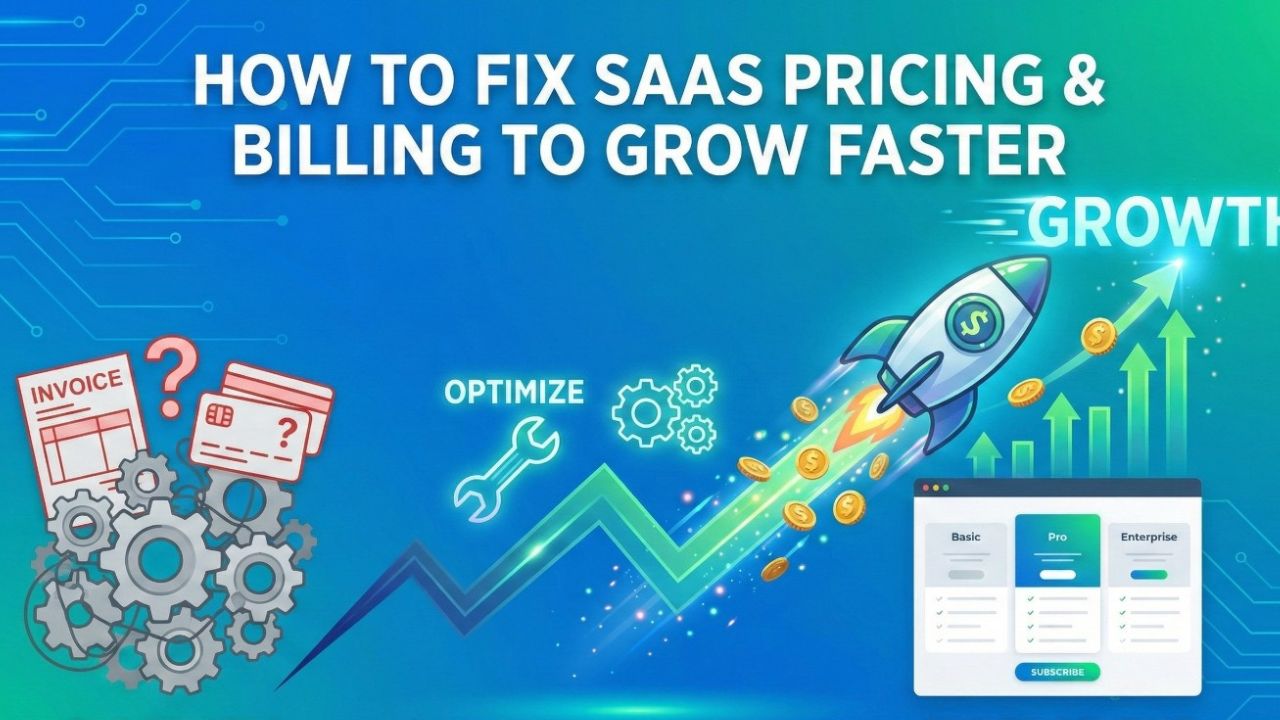
Every software company runs on three things: Pricing, Billing Management, and Financial Metrics. As getting new customers becomes more expensive, you cannot just set a price and forget it. In 2025, you need to align what you charge with the value you provide. This guide will help you fix your pricing, organize your financial operations (RevOps), and improve the numbers investors care about most.
1. Modern Pricing: Charge for Value, Not Just Access
The future of making money in SaaS is flexibility. Companies that adapt their pricing grow the fastest.
A. Usage-Based Pricing (Pay-as-you-go)
The biggest trend is moving away from "per user" fees to "usage" fees. This is often called consumption pricing.
- What it is: Customers pay for what they actually use—like how many emails they send, how much data they store, or how many API calls they make.
- Why it works: It is fair. Small customers pay a little, and big customers pay a lot. This lowers the barrier to entry for new users.
- Hybrid Models: The best companies mix both. They charge a small monthly fee for the platform plus extra for usage. This gives you steady income while allowing you to make more money as customers grow.
B. Getting Users: Freemium vs. Free Trial
Should you give your product away for free? It depends on your goal.
- Freemium (Free Forever): The product is free, but features are limited. This is great for products that are easy to use (like Slack). It creates "Product Qualified Leads" (PQLs)—users who already love your product and are ready to buy. This is the best way to lower your Customer Acquisition Cost (CAC).
- Free Trial (Free for a limited time): You give full access for 14 or 30 days. This is better for complex business software where you need a salesperson to help close the deal.
2. Fixing the Engine: Subscription Management & RevOps
Even with great pricing, you will lose money if your billing system is broken. You need the right software and team alignment.
A. Managing Subscriptions
You need software to handle the heavy lifting of billing.
- Automated Billing: Use platforms like Chargebee or Zoho Subscriptions. They handle invoices and complicated usage calculations automatically.
- Recovering Failed Payments (Dunning): Sometimes credit cards fail. "Dunning" is the process of automatically retrying the card and emailing the customer. This is one of the easiest ways to stop losing customers (churn).
- Global Compliance: If you sell globally, you must follow tax laws in every country. Your billing platform should handle taxes (like GST or VAT) for you.
B. Revenue Operations (RevOps)
RevOps basically means getting your Marketing, Sales, and Customer Success teams to work together.
- Alignment: All teams should use the same data and aim for the same goals.
- Efficiency: It makes the handover from "Lead" to "Customer" smooth, which saves time and money.
3. The Numbers that Matter: Valuation Metrics
Investors don't just look at how much money you make; they look at the quality of that money.
A. LTV and CAC
The health of your business depends on two numbers: Customer Lifetime Value (LTV) and Customer Acquisition Cost (CAC). You want your LTV to be at least 3 times higher than your CAC.
To fix this ratio, focus on getting leads who have already tried your product (PQLs) because they are cheaper to sell to.
B. Net Revenue Retention (NRR)
NRR is the most important metric for B2B SaaS. It measures how much money you keep from your existing customers.
| Factor | Goal | How to Improve |
|---|---|---|
| Expansion Revenue | Make them spend more | Upsell features and add usage-based pricing. |
| Churn | Stop them from leaving | Fix failed payments automatically and improve onboarding. |
Note for Indian Founders: If you want to go global, look for platforms that help you incorporate easily (like Stripe Atlas alternatives such as Skydo or Dodo Payments). They help manage global taxes and banking.
Conclusion
The days of simple flat-fee pricing are ending. To grow in 2025, you need flexible pricing, automated billing, and teams that work together (RevOps). By focusing on keeping your current customers happy and getting them to spend more (NRR), you will build a valuable company that investors love.
Frequently Asked Questions (FAQs)
Q1: What is the main benefit of Usage-Based Pricing?
A: The biggest benefit is that the price matches the value. For customers, it is cheaper to start. For you, revenue grows automatically as they use the product more, without needing to sell them a new plan.
Q2: What is Revenue Operations (RevOps)?
A: RevOps is about alignment. It brings Sales, Marketing, and Customer Success together. They share the same data and goals to make the customer journey smooth from start to finish.
Q3: How do Product Qualified Leads (PQLs) save money?
A: A Product Qualified Lead (PQL) is someone who already used your free version and loved it. Selling to them is much easier and cheaper than finding a stranger (cold lead), which lowers your marketing costs.
Q4: What is Automated Dunning Management?
A: It is a system that automatically handles failed payments. Instead of just sending an email, modern systems use app notifications and smart retry times to recover the money and prevent customers from churning.

Sources and References
The following are the authentic sources referenced in this guide: