Why "Pure PLG" Fails in India: The 2026 Hybrid Strategy Guide
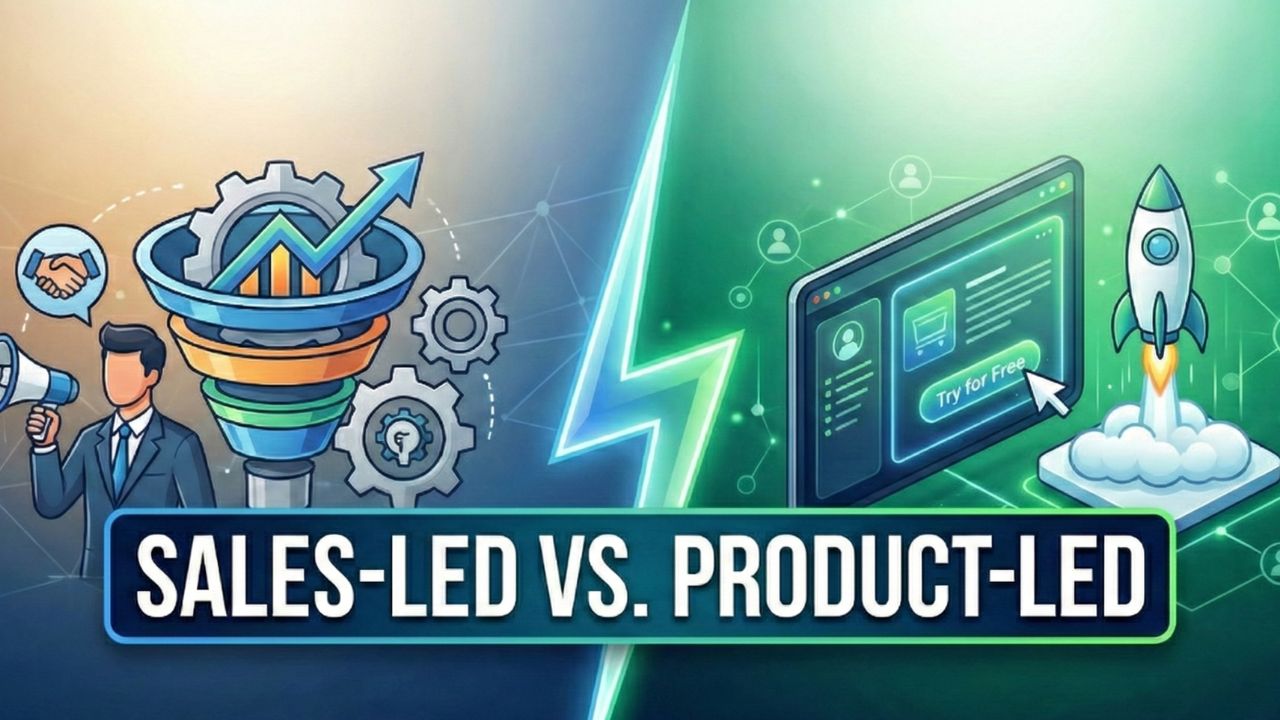
For years, silicon valley doctrine gave Indian founders a binary choice: Go PLG (Product-Led Growth)—build a self-serve tool like Slack or Canva, where users sign up and pay without talking to a human, or Go SLG (Sales-Led Growth)—build an enterprise platform like Salesforce, hire an army of sales reps, and conduct long demo cycles.
In 2026, this binary is dead. The most successful Indian B2B startups—from Postman to emerging AI unicorns—have realized that the Indian market requires a unique blend: The Hybrid Model.
This guide explains why the "Pure PLG" dream often fails in India and how to build a "Product-Led, Sales-Assisted" engine that captures the best of both worlds.
1. Why "Pure PLG" Struggles in India
While PLG offers infinite scale, it hits a "Trust Wall" in the Indian market.
- The "Do It For Me" (DIFM) Culture: Unlike Western markets where DIY (Do It Yourself) is standard, Indian enterprises often prefer high-touch service.
- They want a face to blame if things go wrong.
- Complex Procurement: Even for a $50/month tool, Indian SMEs often require GST invoices, vendor onboarding, and a human point of contact.
The Outcome: A pure self-serve funnel in India often sees high sign-ups but massive drop-offs at the payment gateway.
2. Enter the Hybrid Model: "Product-Led Sales"
The Hybrid Model (or Product-Led Sales) uses the product to generate leads, and humans to close high-value accounts.
The New Funnel:
- Acquisition (PLG): The user discovers the tool, signs up for a free trial, and reaches the "Aha!" moment without human friction.
- Qualification (PQL): The user is not a "Marketing Qualified Lead" (MQL) based on a download. They become a "Product Qualified Lead" (PQL) when they hit a usage trigger (e.g., "Invited 5 team members" or "Exported 3 reports").
- Conversion (SLG): A "Sales-Assist" rep reaches out—not to do a cold demo, but to help them upgrade or navigate enterprise compliance.
3. The 2026 Matrix: When to Intervene?
A "Revenue-First" Product Manager must design the intervention points. You shouldn't call every user. You call the right user at the right time.
| User Signal | Action | Owner |
|---|---|---|
| User signs up & does nothing | Send automated "Nudge" email sequence. | Product (Growth Team) |
| User hits "Aha!" moment | In-app pop-up for 10% discount on self-serve. | Product (Growth Team) |
| User hits usage limit (Paywall) | Trigger "Sales Assist" call. | Junior Sales Rep |
| User invites >10 colleagues | "Enterprise Upgrade" flag. Account Executive reaches out. | Senior Sales (AE) |
The Strategy: The Product team's job is to "warm up" the user until they are ready for Sales.
4. Designing for the "Trust Layer"
In 2026, Indian PMs are building "Trust Features" that facilitate this hybrid motion:
- "Talk to an Expert" Buttons: Strategically placed inside the dashboard, not just the homepage.
- Transparent Pricing... mostly: Showing "Starter" pricing openly (PLG) but "Enterprise" pricing as "Contact Us" (SLG).
- WhatsApp Integration: Using WhatsApp Business APIs for the "Sales Assist" motion, meeting Indian customers where they live.
Conclusion: It's Not "Vs", It's "And"
The "Revenue-First" Product Leader doesn't fight Sales; they feed Sales.
By building a Hybrid Model, you lower the Customer Acquisition Cost (CAC) by letting the product do the heavy lifting, while keeping the Lifetime Value (LTV) high by using humans to close big deals.
Your 2026 goal: Build a product so good it sells itself, but build a sales process so human it builds trust forever.
FAQ
Q1: Isn't "Hybrid" just expensive?
No. It is actually cheaper than pure SLG because your sales team only talks to "warm" leads (PQLs) who already use the product. They stop wasting time on cold calls.
Q2: How do I track this?
You need a "Product Analytics" tool (like Mixpanel) connected to your CRM (like Salesforce/HubSpot). This unification is the core of the Revenue Operations (RevOps) trend.
Q3: Does this work for B2C?
This guide focuses on B2B. However, "High-Ticket B2C" (EdTech, Real Estate Tech) in India effectively uses this model—app usage leads to a counselor call.