Your PMO Operating Model Is Obsolete by 2027
- The Intelligence Shift: The future of the PMO lies in becoming a strategic intelligence unit, completely abandoning its legacy identity as a reporting function.
- Mechanical Obsolescence: If your team's primary value proposition is "status accuracy," those roles are highly exposed to automation by 2027.
- The Judgment Layer: AI replaces data collection, not executive judgment. Humans must now focus on governance, trade-off negotiation, and terminating weak initiatives.
- New Capabilities: A modern PMO target operating model requires staff skilled in governing probabilistic AI models and directing autonomous agents.
The AI PMO operating model turns a reporting function into a strategic intelligence unit—or makes it redundant. The era of building careers on compiling status updates and formatting executive slide decks is rapidly ending.
As detailed in our 2026 playbook for AI project portfolio management, AI agents are absorbing the mechanical layer of project tracking. To survive this transition, enterprise PMOs must execute a radical, four-shift redesign of their operating models before board scrutiny identifies their current functions as overhead.
The Core Redesign: From Reporting to Strategic Intelligence
When AI agents automatically handle status chasing, generate reports, and flag budget variances, the traditional PMO's job description completely hollows out. You can no longer justify a massive headcount simply to coordinate information across silos.
The office must evolve into a strategic intelligence unit. This means shifting from passively recording what has already happened to actively advising the steering committee on where to deploy capital next.
This evolution is mandatory for organizations transitioning toward funding products, not projects. In a continuous funding environment, you must govern value streams dynamically, which requires an entirely new operating model.
The Four-Shift Target Operating Model
Redesigning the PMO target operating model requires executing four distinct functional shifts:
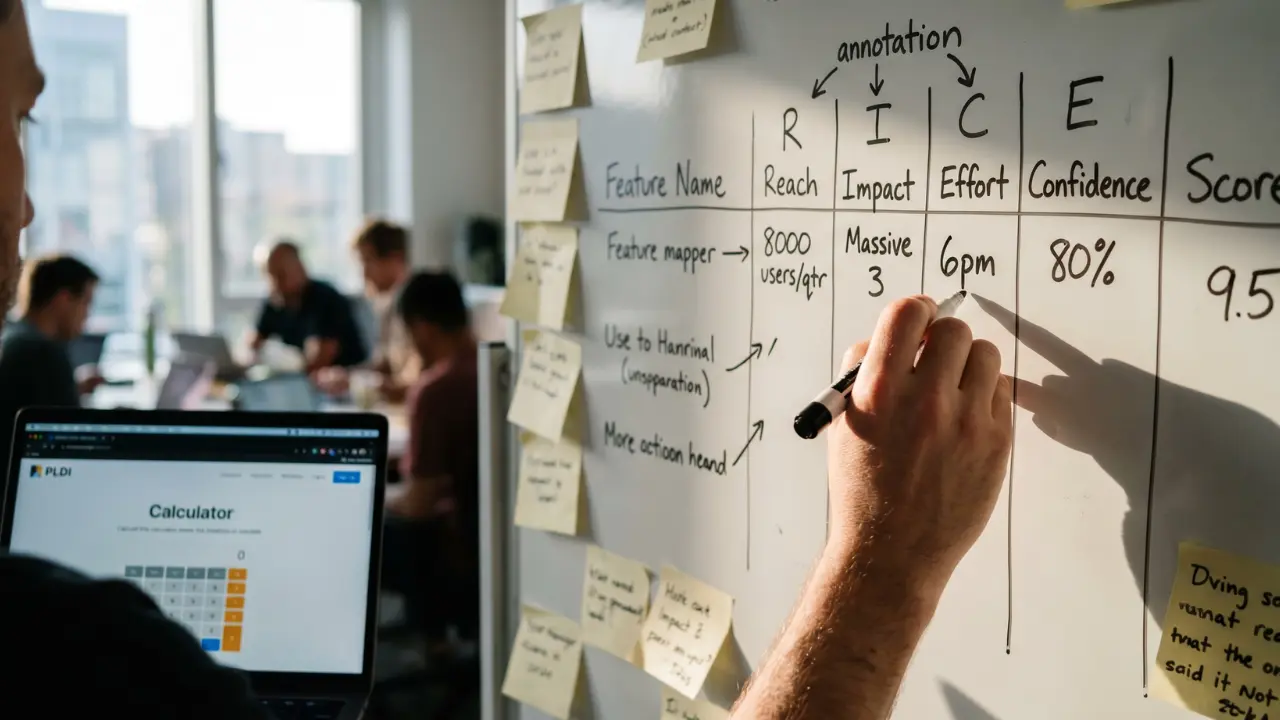
- From Data Collection to Data Governance: PMO analysts stop compiling spreadsheets and start auditing the data pipelines that feed the machine learning models.
- From Variance Reporting to Predictive Intervention: Instead of logging a delay, the PMO uses algorithmic forecasts to execute resource reallocations weeks before the delay materializes.
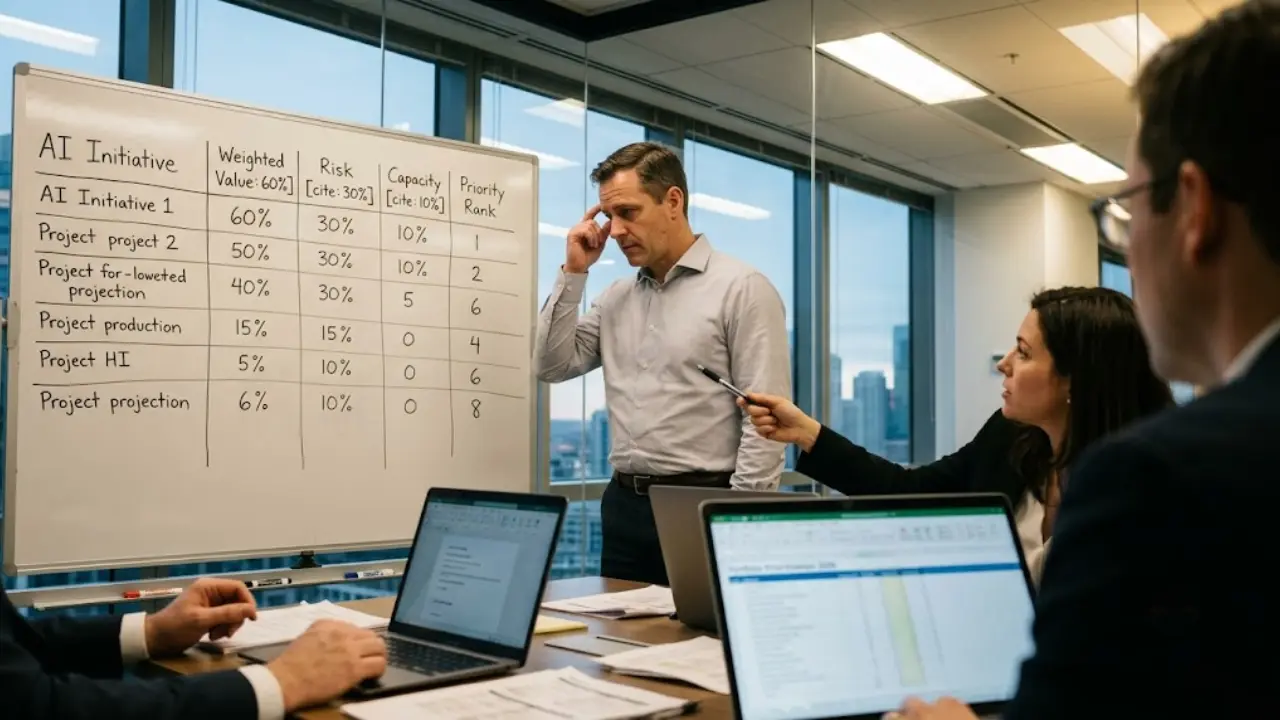
- From Manual Prioritization to Model Tuning: PMO leaders stop arguing over spreadsheet rankings and start governing the strategic weighting coefficients within their prioritization algorithms.
- From Project Tracking to Outcome Steering: The office abandons task-level oversight, focusing entirely on whether a funded initiative is hitting its overarching strategic OKRs.
The New Roles in an AI-Era PMO
To execute this strategic PMO vision, job descriptions must be aggressively rewritten. The new PMO structure relies heavily on individuals who can interface between machine logic and human strategy.
The most critical new roles are AI Model Governors and Strategic Trade-off Negotiators. Model Governors are responsible for ensuring algorithmic prioritization aligns with board-level strategy, constantly tuning the AI to prevent bias.
Trade-off Negotiators take the risk alerts generated by the AI and force the politically difficult conversations with executive sponsors to stop or pause failing work.
This is the unfiltered reality of managing an agentic AI PMO. The humans handle the politics; the machines handle the data.
Will the PMO Survive the Agentic Shift?
The anxiety surrounding the PMO role 2027 is valid. Many traditional PMOs will not survive. However, the PMO as a functional concept will thrive if it elevates its mandate.
AI replaces the mechanical layer—the first-pass analysis, the tracking, the reporting—but it cannot replace the judgment layer. The directors who successfully navigate this PMO transformation AI will become the most valuable strategic advisors in the enterprise.
They will govern fleets of agents, negotiate complex cross-functional trade-offs, and own the final call on whether to fund or kill an initiative.
Begin Your Redesign Today
The window to transform your PMO on your own terms is closing. By 2027, boards will refuse to fund departments that manually perform tasks an agentic system can execute instantly.
Audit your current team's capabilities, eliminate your mechanical reporting workflows, and begin transitioning your staff toward high-level strategic intelligence. The technology is already here; your operating model must now catch up.
Frequently Asked Questions (FAQ)
An AI PMO operating model is a modernized governance framework where autonomous agents handle the mechanical tracking, reporting, and predictive forecasting of a portfolio. This allows human staff to operate strictly at the strategic judgment and political negotiation layer.
AI changes the target operating model by stripping away administrative roles. It shifts the PMO's structural focus from backward-looking variance reporting to forward-looking strategic intelligence, fundamentally altering the required skills, daily cadences, and value propositions of the office.
Yes, but only if it evolves. PMOs that cling to mechanical status reporting will be made redundant by autonomous agents. PMOs that pivot to governing those agents, managing data hygiene, and facilitating complex executive trade-offs will become indispensable to the board.
When AI handles the mechanical work, the PMO focuses entirely on strategic steering. They audit algorithmic prioritization weights, negotiate resource shifts across value streams, govern AI compliance models, and manage the human change required to terminate underperforming initiatives.
You redesign the model by executing a four-shift transition: moving from data collection to data governance, variance reporting to predictive intervention, manual prioritization to algorithmic model tuning, and tactical project tracking to strategic outcome steering.
New roles include AI Model Governors, who ensure scoring algorithms align with corporate strategy, and Strategic Trade-off Negotiators, who utilize AI-generated insights to force politically difficult executive decisions regarding project defunding and major resource reallocations.
It becomes a strategic intelligence unit by leveraging AI to synthesize millions of execution data points into actionable board-level insights. Instead of presenting spreadsheets of past failures, it presents dynamic, AI-modeled funding scenarios and proactive risk mitigation strategies.
The AI-era leader needs deep expertise in algorithmic governance, prompt engineering, financial scenario modeling, and advanced strategic negotiation. They must be capable of understanding probabilistic data forecasts and defending those AI-driven recommendations to a highly skeptical steering committee.
Transformation is a phased journey. A foundational transition takes 90 days: establishing data hygiene, piloting one low-risk AI decision class, and setting governance guardrails. Fully shifting the staff’s skillset and the enterprise's funding culture typically requires 12 to 18 months.
The biggest barrier is human resistance, specifically from senior personnel whose entire corporate value is tied to status compilation and manual reporting. Overcoming this requires aggressive reskilling mandates and a firm executive refusal to accept legacy administrative workflows.