AI Agent Framework Updates Docs Don't Flag
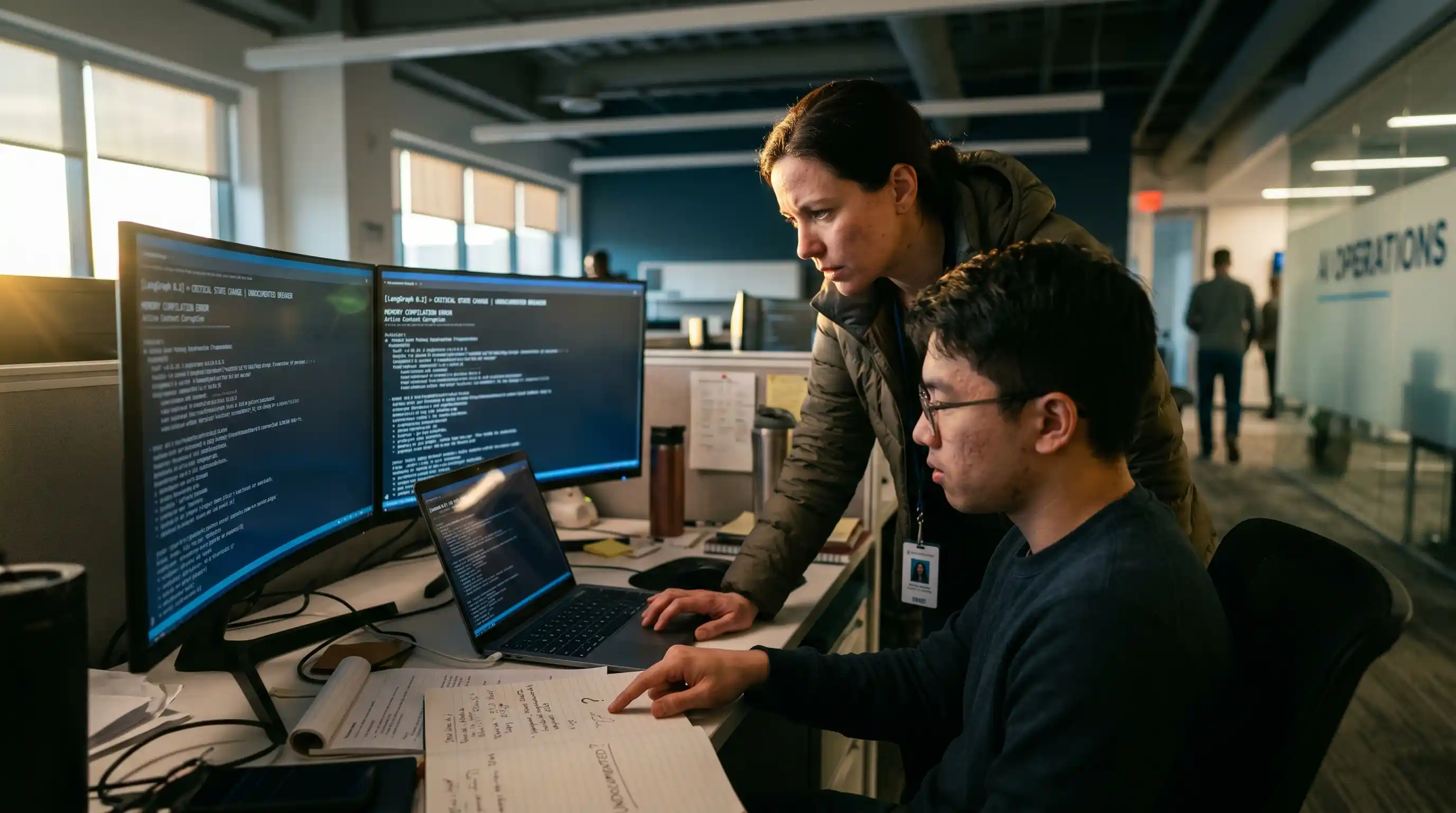
- Undocumented Breakers: Minor semantic updates in open-source libraries routinely alter underlying runtime states, breaking long-running autonomous workflows.
- State Machine Risk: Major updates to graph runtimes like LangGraph introduce memory compilation modifications that can instantly corrupt active token contexts.
- The AgentOS Shift: Emerging operating system abstractions are isolating base agent logic from underlying framework libraries to lower infrastructure fragility.
- Registry Defenses: High-scale enterprise delivery fleets are shifting to hard version registries to systematically mitigate background dependency drift.
AI agent framework updates ship faster than changelogs explain. One quiet breaking change can derail your entire production fleet while the official documentation stays completely silent.
Here are the release notes that actually matter for multi-agent systems in 2026.
To keep your deployment pipeline steady, software engineering teams must cross-reference raw commit logs against the broader macro shifts analyzed across our live multi-agent ai orchestration news desk.
Relying strictly on vendor marketing prose will introduce silent failures into your execution state layers.
Unmasking Hidden Breakers in AI Agent Framework Updates
The open-source engineering landscape for agentic architectures is evolving at an unprecedented pace.
This hyper-velocity makes comprehensive, structured documentation a secondary priority for core project maintainers.
The Velocity Problem in LangGraph, CrewAI, and Agno
Popular development systems like LangGraph, CrewAI, and Agno push deep code refactors straight to main branches multiple times a week.
These iterations address immediate scalability concerns but alter how underlying methods handle asynchronous tasks.
When package managers pull these micro-updates, internal loops can shift subtly.
This behavior often surfaces as sudden drops in tool-calling precision or memory retrieval failures, long before an official changelog is written.
Why Official Logs Miss Critical Runtime Issues
Standard changelogs are built to highlight new features, performance milestones, and basic usage adjustments.
They are not engineered to trace the deep behavioral consequences of altered system prompts inside the framework's native tools.
[Framework Code Update] ──► [Altered System Prompt] ──► [Altered LLM Behavior]
│
▼
[Silent Runtime Defect] ◄── [Context Bloat Loop] ◄── [Tool Call Precision Drop]
A minor refactor designed to clean up internal class definitions can change how an agent appends historical messages to its context.
This introduces unexpected variations in processing behavior that standard unit tests fail to catch.
Structural Shifts: AgentOS and Multi-Agent Orchestration
As frameworks become more complex, the industry is forcing a clear separation between the underlying agent code logic and the infrastructure execution layer.
How AgentOS Rewrites Framework Selection
The emergence of AgentOS abstractions marks a major transition in the market.
Instead of tying development to a specific library's execution rules, engineering teams are beginning to treat frameworks as interchangeable components.
┌────────────────────────────────────────────────────────┐
│                   AgentOS Layer                        │
│     (Standardized State / Memory / Tool Router)        │
└───────────────────────────┬────────────────────────────┘
                            │
          ┌─────────────────┼─────────────────┐
          ▼                 ▼                 ▼
  ┌──────────────┐  ┌──────────────┐  ┌──────────────┐
  │  LangGraph   │  │    CrewAI    │  │     Agno     │
  └──────────────┘  └──────────────┘  └──────────────┘
AgentOS acts as a clean translation layer for state tracking, tool routing, and memory patterns.
This decoupling reduces vendor lock-in and protects your main system from breaking changes when a single underlying package upgrades.
Managing State Machine Degradation
Multi-agent environments depend on reliable, predictable state routing. If an update changes how a framework evaluates conditional edges within its execution graph, the entire workflow can break down.
Agents may begin repeating loops, dropping active parameters, or completely ignoring human validation gates.
This risk shows why scaling teams treat orchestration-as-practice rather than a simple configuration step.
Mitigation Architecture for Production Fleets
Protecting live enterprise applications from unexpected open-source changes requires setting up strict code boundaries.
Strict Version Pinning Protocols
Enterprise engineering teams should avoid using flexible version ranges in their package configurations.
Allowing automatic minor or patch updates exposes your production environment to unverified code changes.
Instead, use exact version pinning tied to deep SHA validation hashes.
Every individual framework update must undergo isolated integration testing to confirm baseline behavior remains stable before entering production.
Integration with a Versioned Agent Registry
To scale safely, production systems should decouple agent deployment from the core application codebase using a secure, versioned agent registry.
┌─────────────────────────────┐
│   Versioned Agent Registry  │
└──────────────┬──────────────┘
┌──────────────┼──────────────┐
▼              ▼              ▼
┌─────────────────┐ ┌─────────────────┐ ┌─────────────────┐
│ Agent Lambda v1 │ │ Agent Lambda v2 │ │ Agent Lambda v3 │
│ [LangGraph 0.1] │ │ [LangGraph 0.2] │ │ [AgentOS Native]│
└─────────────────┘ └─────────────────┘ └─────────────────┘
This setup runs each agent group inside an isolated container with its own locked dependencies.
This design allows you to test new framework updates on single agents without risking the stability of your wider production ecosystem.
Conclusion & CTA
Relying on high-level documentation leaves your production applications vulnerable to unexpected open-source updates.
By implementing exact version pinning and isolating your environments, you protect your systems from background dependency drift.
Audit your current package configurations today to ensure your multi-agent infrastructure remains protected against silent runtime modifications.

Frequently Asked Questions (FAQ)
Recent releases across major frameworks focus heavily on optimizing state graphs, improving token streaming speeds, and refining multi-agent messaging structures. However, these updates often include undocumented changes to internal engine prompts that alter how models select tools.
LangGraph recently overhauled its checkpointer memory system for long-term state management. CrewAI refined its task routing hooks, and Agno updated its integration modules. Each update improves performance but introduces subtle breaking changes to existing multi-agent routing configurations.
Do not rely solely on published changelogs. Set up automated repository scanners to flag pull requests containing modifications to core runtime classes, system instructions, or state tracking engines.
LangGraph remains a highly stable option for deterministic, graph-based enterprise workflows due to its explicit state machine structure. However, achieving production stability requires pinning specific library versions to insulate applications from background dependency changes.
Major open-source agent frameworks frequently ship breaking changes, often releasing multiple updates within a single week. Even minor patch versions can introduce hidden modifications to memory structures or prompt processing.
AgentOS is an emerging architectural layer that standardizes state, memory, and tool execution interfaces. It abstracts the core runtime, letting engineers switch underlying frameworks (like LangGraph or CrewAI) without rewriting their main business logic.
Yes, pinning specific versions is critical for production safety. Failing to pin versions allows automated deployment systems to pull untested open-source updates, which can introduce runtime defects into live customer workflows.
An unverified update can alter an agent's input or output schema, breaking compatibility with your versioned agent registry. Isolating agent versions in a secure container registry protects your system from cascading runtime failures.
The updates that matter most are those affecting state-machine execution, message serialization, and cross-agent communication protocols. Changes to these core systems alter how context is shared across your multi-agent architecture.
Official changelogs are maintained in the release sections of their respective GitHub repositories. Because these summaries regularly omit critical runtime details, teams should audit actual commit logs before updating production packages.