Vibe Coding Alternatives: 5 Workflows Senior Devs Use
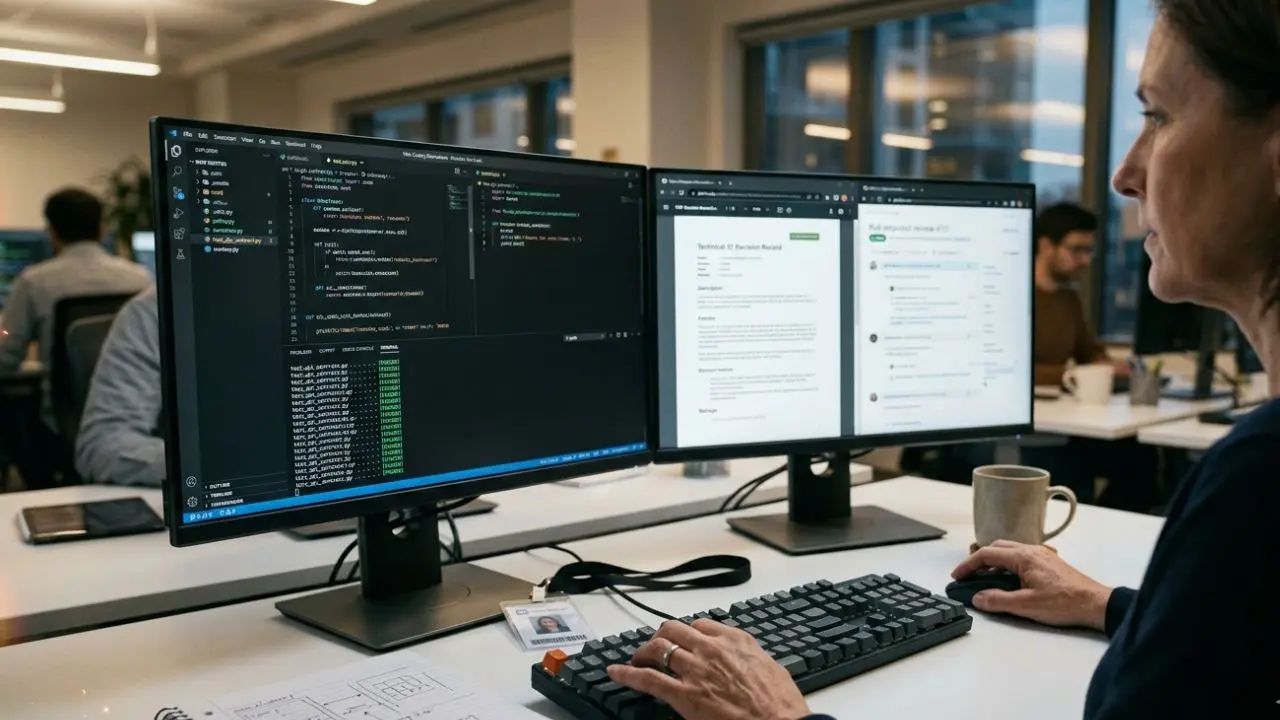
- Staff engineers orchestrate: They use AI as a high-level tool but retain strict control over architecture and logic.
- Testing is mandatory: Test-driven AI development acts as an essential guardrail against Large Language Model (LLM) hallucinations.
- Specs drive generation: Spec-driven workflows prevent severe architectural drift when applications scale beyond 100,000 lines of code.
- Pair programming evolves: AI pair programming remains a powerful, controlled alternative to autonomous generation.
Senior engineers don't vibe code — they orchestrate. While junior developers are blindly trusting AI to generate entire modules, staff engineers are actively protecting their codebases.
The hype around zero-prompt development has led directly to the severe vibe coding production disasters we have documented across the industry this year.
If you want to scale your application without drowning in technical debt, you need to abandon the hype.
You must adopt the rigorous vibe coding alternatives experienced developers rely on to ship secure, enterprise-grade software.
Why Senior Engineers Reject the Hype
The fundamental issue with autonomous generation is the loss of code provenance.
When developers surrender control of the logic, they surrender their ability to debug it when production inevitably breaks.
Before adopting any new workflow, it is critical to get the karpathy vibe coding definition explained properly.
It was never intended to be a license for sloppy engineering. To maintain velocity without sacrificing quality, seasoned professionals utilize specific, highly structured methodologies.
The 5 Vibe Coding Alternatives Experienced Developers Actually Use
These five workflows represent the most cited methodologies used by top-tier engineering teams to safely extract value from AI tools.
1. Orchestrated AI Coding
Orchestration treats the AI as a junior developer. The senior engineer defines the exact architecture, data models, and API contracts first.
The AI is only permitted to fill in the highly constrained, pre-defined logic blocks. This completely eliminates the "black box" generation risk.
2. Test-Driven AI Development (TDAID)
In this alternative, the human writes the tests, and the AI writes the code to pass them.
By defining the exact success criteria beforehand, the developer ensures the AI's output is mathematically verifiable.
If the AI hallucinates, the test suite immediately rejects the pull request.
3. Spec-Driven AI Generation
Before a single line of code is written, a comprehensive technical specification is created.
This specification is fed into the LLM as a rigid system prompt. The AI is forced to adhere to the spec, significantly lowering the production-defect rate by aligning output with enterprise architecture.
4. Strict AI Pair Programming
Unlike autonomous vibing, true AI pair programming workflow keeps the human actively in the driver's seat.
The AI acts as an advanced autocomplete and suggestion engine. It predicts the next few lines of syntax, but the developer reads, understands, and manually commits every single keystroke.
5. Architectural Scaffolding via LLM
Staff engineers often use AI strictly for generating boilerplate infrastructure.
The AI sets up the routing, the folder structures, and the basic CRUD interfaces.
Once the scaffolding is built, AI generation is disabled, and humans write the core business logic.
Scaling Past 100k Lines of Code
When applications scale past 100k lines of code, AI tools experience severe context collapse.
Autonomous workflows break down entirely because the LLM cannot hold the entire repository in its memory.
By utilizing spec-driven generation and orchestrated coding, staff engineers explicitly manage the context window.
They feed the AI only the specific files necessary for the immediate task. For a broader perspective on managing technical debt and scaling team workflows, refer to our comprehensive Agile Product Strategy Guide.
Conclusion
The data is clear: abandoning engineering rigor for the sake of AI-driven velocity is a catastrophic mistake.
By adopting the structured alternatives that staff engineers actually use, you can harness the power of generative models while keeping your production environment secure.
Stop guessing and start orchestrating. To understand the full scope of what happens when these practices are ignored, return to our main investigation.

Frequently Asked Questions (FAQ)
What do senior developers use instead of vibe coding?
Senior developers rely on highly structured workflows like orchestrated AI coding, test-driven AI development, and strict AI pair programming. These methods allow them to utilize AI for velocity while maintaining total control over the application's core logic and architecture.
Is AI pair programming a safer alternative to vibe coding?
Yes, AI pair programming is significantly safer. It keeps the human developer actively engaged in the process line-by-line, drastically reducing the chances of unverified, hallucinated code being merged into production environments.
How does test-driven AI development compare to vibe coding?
Test-driven AI development forces the human to define strict parameters first by writing robust tests. The AI then generates code solely to pass those tests, ensuring the output is immediately verifiable, unlike the unpredictable nature of unstructured generation.
What are the 5 most-cited vibe coding alternatives on Hacker News?
The 5 most-cited alternatives include orchestrated AI coding, test-driven AI development (TDAID), spec-driven AI generation, strict AI pair programming, and utilizing LLMs purely for architectural scaffolding.
Which workflow scales past 100k lines of code without breakdowns?
Spec-driven AI generation and orchestrated AI coding are the only reliable workflows at this scale. They prevent the context window degradation that typically causes AI tools to hallucinate when analyzing massive, enterprise-grade repositories.
How do staff engineers use Claude Code without vibe coding?
Staff engineers use Claude Code by feeding it highly detailed architectural specifications and limiting its scope to specific, isolated functions. They treat it as an advanced analytical tool rather than an autonomous application builder.
What's the difference between orchestrated AI coding and vibe coding?
Orchestrated AI coding is a top-down approach where the human dictates the overarching architecture and constraints before the AI generates anything. Vibe coding is a bottom-up, iterative approach heavily reliant on the AI's internal assumptions.
Are spec-driven AI coding workflows worth the overhead?
Yes, the initial overhead of writing detailed specifications pays massive dividends. Spec-driven workflows drastically reduce debugging time, prevent architectural drift, and ensure the final AI-generated code aligns perfectly with enterprise security standards.
Which alternative has the lowest production-defect rate?
Test-driven AI development (TDAID) consistently yields the lowest production-defect rate. Because every piece of AI-generated logic must pass human-authored unit and integration tests before deployment, regressions are caught immediately in the CI/CD pipeline.
How do top open-source maintainers gate AI contributions in 2026?
Top open-source maintainers gate AI contributions by demanding total code provenance. They require contributors to use spec-driven or orchestrated workflows and often auto-reject PRs that feature massive, unexplainable blocks of AI-generated logic.