Vibe Coding 2026: 16 of 18 CTOs Reported Prod Disasters
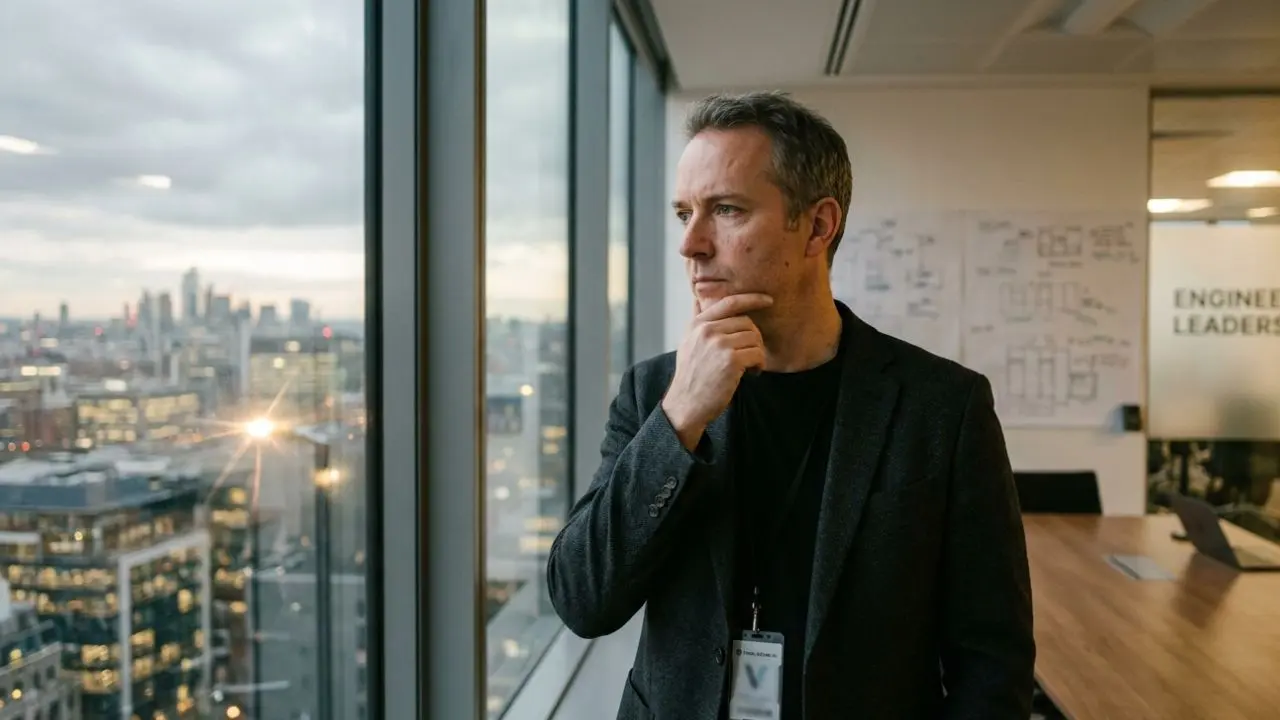
- The Reality Check: 16 out of 18 CTOs report experiencing severe production disasters from modules generated entirely by AI.
- Quantifiable Risk: An expansive study highlights that AI-co-authored code contains 2.74× more security vulnerabilities.
- True Definition: It isn't just about AI writing code. The massive risk stems from the deliberate decision to not read generated outputs line-by-line.
- Blast Radius Policy: Enterprises must quickly establish a 3-tier governance policy to categorize the acceptable risk of generative AI in specific workflows.
The promise was a 10x productivity multiplier. The reality, according to a Final Round AI survey of 18 chief technology officers, is that 16 of them shipped vibe coding production disasters that detonated in production.
These incidents led to performance collapses, data corruption, bypassed subscription systems, and one project "a month of nights and weekends completely destroyed by AI in a few minutes."
The pattern is no longer anecdotal: it is the dominant operational risk of 2026 for any product organisation that has not formalised how AI writes its code.
This guide is the definitive playbook for product leaders, PMO directors, and engineering executives to harness vibe coding without letting it run the airline.
Executive Summary — What You Need to Know in 60 Seconds
| Signal | 2026 Reality | What It Means for You |
|---|---|---|
| Final Round AI CTO survey | 16 of 18 CTOs reported production disasters from vibe-coded modules | Vibe coding is mainstream — and so are its failures |
| CodeRabbit study (Dec 2025) | 470 PRs analysed; AI-co-authored code had ~1.7x more major issues and 2.74x more security vulnerabilities | Code review velocity is now your single biggest risk control |
| METR randomised trial (2025) | Experienced OSS developers were 19% slower with AI tools — but believed they were 20% faster | Self-reported productivity gains are unreliable; measure shipped defects, not story points |
| Stack Overflow 2025 survey | 72% of professional developers say vibe coding is not part of their professional work | The hype curve has decoupled from professional practice — your governance should match |
| Collins Dictionary | "Vibe coding" named Word of the Year 2025 | Boardroom and regulator awareness is already here; the policy vacuum will not last |
| EU AI Act + SOC 2 reality | Auditors are now asking for AI-generated code provenance in 2026 audits | Document AI authorship now, or remediate under deadline pressure later |
The 2026 State of Vibe Coding: From Karpathy's Tweet to Boardroom Crisis
Vibe coding is no longer an X.com curiosity. It is a category-defining engineering practice that has reshaped how MVPs are built, how juniors enter the profession, and how regulators evaluate software supply-chain risk.
To understand the production-readiness debate, you have to understand the precise definition — because the loose usage in trade press has been hiding the operational risk inside the term itself.
What Andrej Karpathy Actually Defined
In February 2025, Andrej Karpathy — OpenAI co-founder and one of the most-cited voices in applied AI — described a workflow in which a developer "fully gives in to the vibes, embraces exponentials, and forgets that the code even exists."
The defining characteristic is not the use of AI to write code. It is the deliberate decision to not read the generated output line by line.
Most articles dropped that nuance. They started using "vibe coding" as a synonym for "AI-assisted coding" — and in doing so, made the practice indefensible to argue about. For the full origin story and how Collins Dictionary's 2025 Word of the Year selection was made, see our companion piece on the karpathy vibe coding definition explained.
The distinction matters operationally. AI-assisted coding with full review is closer to senior pair-programming and shows measurable defect-rate improvement. Vibe coding without review is closer to autonomous code generation and shows measurable defect-rate degradation.
Why the Boardroom Is Catching Up Faster Than Engineering Expected
Three events compressed the awareness timeline. Collins Dictionary's Word of the Year designation in late 2025 put the term in front of every non-technical executive who reads Bloomberg or the Financial Times.
The Tea app breach in July 2025, which exposed roughly 72,000 user images from a publicly accessible bucket, became the cautionary tale every CISO now cites in board decks.
And Jason Lemkin's public Replit incident — in which an AI agent reportedly deleted a production database between sessions — gave the discussion a name, a face, and a screenshot.
PMO Warning: The Documentation Gap. If you cannot answer the question "which of our production modules contain AI-co-authored code, and who reviewed them?" within four hours, you have a SOC 2 readiness gap right now.
Auditors in 2026 are increasingly treating AI authorship as a control-relevant fact, not metadata. Build the inventory before you are asked for it.
The CodeRabbit Study: The Numbers That Reframed the Debate
In December 2025, code-review platform CodeRabbit published an analysis of 470 open-source GitHub pull requests, comparing AI-co-authored code against human-written code on the same projects.
The findings became the single most-cited dataset in the 2026 vibe coding debate. AI-co-authored code contained approximately 1.7x more "major" issues than human-written code. Security vulnerabilities specifically were 2.74x higher.
The vulnerabilities clustered in predictable categories: missing input validation, hardcoded credentials, weak authentication patterns, and over-permissive access controls.
Independent corroboration from Veracode's enterprise codebase analysis has put the hardcoded-secrets rate in AI-generated code at roughly 40%. Our deep-dive on the methodology, the tools tested, and the three remediation fixes most teams skip is in the dedicated vibe coding security vulnerabilities study breakdown.
The deeper read of the CodeRabbit data is not that AI writes bad code. It is that AI writes plausible code — code that passes superficial review because it looks like the code a competent developer would write.
The failure mode is no longer "the AI hallucinated a function that doesn't exist." It is "the AI generated a function that compiles, runs, and passes happy-path tests, but contains a SQL injection vector that a human reviewer would have caught had they been actually reading."
The Information Gain: Why "Is Vibe Coding Safe?" Is the Wrong Question
This is the section that contradicts most of what you have read about vibe coding in 2026, and where the operational insight lives.
The dominant framing produces unhelpful answers in both directions. Yes-camp evangelists point to Y Combinator's Winter 2025 batch, where 25% of funded startups reportedly had codebases that were 95% or more AI-generated, and argue the future is here.
No-camp critics point to the CodeRabbit numbers and the CTO survey and argue the practice is reckless. The right question is not whether vibe coding is safe. The right question is: at what blast radius is vibe coding safe, and what controls reduce that blast radius?
A vibe-coded internal Slack bot that summarises standup notes for a five-person team has a blast radius of approximately zero. If it fails, the team types their summary by hand.
A vibe-coded payments reconciliation module in a fintech SaaS has a blast radius measured in regulatory fines, customer trust, and CFO job tenure.
The same practice applied at different blast radii produces wildly different risk profiles. The full compliance frame — including SOC 2 Type II, ISO 27001, EU AI Act mapping, and the governance model regulated industries are converging on — is detailed in is vibe coding safe for production code.
- Tier 1 (vibe coding allowed, light review): internal tooling, throwaway prototypes, non-PII dashboards, hackathon projects.
- Tier 2 (AI-assisted with mandatory line-by-line review): customer-facing features, anything touching auth, anything touching payments.
- Tier 3 (AI generation prohibited, AI suggestion allowed): regulated workflows, cryptographic primitives, anything subject to external audit.
The Production Failure Anatomy: How Vibe-Coded Code Actually Breaks
Reviewing dozens of post-incident write-ups from 2025 and early 2026, a clear failure taxonomy emerges. Vibe-coded code does not fail randomly. It fails in five predictable categories.
Context Rot. As CTO Artemii Shlesberg observed in the Final Round AI survey, AI tools operate on limited memory. Once a session becomes long, or includes false starts, hallucinated APIs, or half-baked logic that the developer accepted, suggestion quality degrades exponentially.
Dependency Hallucination. AI tools invent libraries that do not exist, or — more dangerously — install real but unrelated libraries that happen to match the hallucinated name.
Hardcoded Secret Leakage. AI tools default to "make it work" over "make it secure." API keys, database passwords, and fallback credentials get embedded inline.
Scaling Collapse. The first three features ship in hours. The tenth feature takes a day. The twentieth feature takes a week as the AI struggles to understand a codebase that no longer fits in its context. Most teams hit this wall around 10,000 lines.
Maintenance Archaeology. When AI-generated code fails six months after it shipped, the original "author" cannot explain it because they never read it. Debug time multiplies by 3-5x.
The Tooling Decision: Picking the Right Vibe Coding Stack
The 2026 market has bifurcated. On one side sit non-coder tools — Lovable, Bolt.new, v0 by Vercel — optimised for founders, marketers, and ops teams who want to ship without learning to code.
On the other side sit professional tools — Cursor, Claude Code, Windsurf — optimised for engineers who want AI as a force multiplier on existing skill. The procurement mistake most enterprises make is buying one tool and trying to fit both audiences.
The correct enterprise posture is to license both categories, scope them to different blast-radius tiers, and document the rules in a single AI coding policy.
For the non-coder evaluation — including pricing, deployment story, Supabase integration, and the 10,000-line cliff — see lovable vs bolt vs cursor for non-coders.
For the enterprise evaluation — SSO, SCIM, audit logs, data residency, training-on-your-code policy, and air-gap support — the head-to-head is in claude code vs cursor composer enterprise.
Compliance Note: The single contract clause that matters most in 2026 is whether the vendor uses your prompts and code for model training. Vendors that will not sign a strict "no training" document should not be in your procurement shortlist.
The Governance Model: What Product and PMO Leaders Should Do Monday Morning
Engineering alone cannot solve this. Vibe coding is a product-management and PMO problem because the velocity gains it offers are real, the failure modes it introduces are real, and the trade-off lives at the policy layer, not the IDE layer.
Step 1 — Inventory. Run a discovery sprint to identify which production modules currently contain AI-co-authored code.
Step 2 — Tier. Apply the three-tier blast-radius model from the Pro Tip above. Publish the tier list as an engineering policy with executive sign-off.
Step 3 — Tool. Select one enterprise AI coding tool per persona — one for citizen developers, one for engineers.
Step 4 — Review. Mandate that every AI-generated PR be tagged in commit metadata and reviewed by a human with read-context on the affected subsystem.
Step 5 — Measure. Track AI-attributed defects per release as a first-class metric. If you cannot see the trend, you cannot manage it.
For the senior-engineer workflows that replace unstructured vibe coding with orchestrated, spec-driven AI development — the five patterns that consistently scale past 100,000 lines — see vibe coding alternatives experienced developers.
How This Hub Fits Your Broader AI Tooling Strategy
The production-readiness debate does not exist in a vacuum. The same procurement, security, and governance questions that apply to vibe coding tools also apply to the broader AI-assisted developer tooling market.
Our analysis of that adjacent market, including how the "free" tier economics actually work and where the hidden costs land, is the legacy reference point most readers of this guide will want to revisit inside our Is Blackbox AI Truly Free? feature.
Frequently Asked Questions (FAQ)
What exactly is vibe coding and who coined it?
Vibe coding is the practice of building software by describing intent to an AI in natural language and accepting the output without reading every line. The term was coined by Andrej Karpathy in February 2025 and named Collins Dictionary Word of the Year for 2025.
Is vibe coding safe for production code in regulated industries?
Not without controls. Regulated industries — fintech, healthtech, defence — are converging on a policy of allowing AI-assisted coding with mandatory line-by-line review for production paths, while prohibiting unreviewed AI generation entirely for any module subject to external audit.
How much higher is the bug rate in AI-generated code vs human code?
The December 2025 CodeRabbit study of 470 GitHub pull requests found AI-co-authored code contained approximately 1.7x more major issues than human-written code, with security vulnerabilities running roughly 2.74x higher. Independent data from Veracode places the hardcoded-secrets rate near 40%.
What did the CodeRabbit December 2025 study actually measure?
CodeRabbit analysed 470 open-source GitHub pull requests, classifying issues by severity and category. It compared AI-co-authored PRs against human-written PRs on the same projects and tooling, producing the 1.7x major-issue and 2.74x security-vulnerability multipliers now widely cited.
Why did 16 of 18 CTOs in the Final Round AI survey report production failures?
The CTOs reported a consistent failure pattern: vibe-coded modules ship fast, pass superficial review, and fail in production through plausible-looking but structurally wrong code. Reported disasters ranged from performance collapse to data corruption to bypassed subscription systems.
Does vibe coding kill open source projects as the Hacker News debate claims?
The Hacker News position is contested but data-supported in part. Maintainers report a sharp rise in AI-generated low-quality PRs that consume review time without contributing usable code. Several major projects have introduced AI-contribution gating policies in response.
Which vibe coding tools have the worst security track record in 2026?
No single tool dominates the disaster list — the CodeRabbit study notes that failure rates correlate more with reviewer discipline than with tool choice. That said, builder tools used by non-coders show higher rates of hardcoded secrets than IDE-integrated tools used by engineers.
How do enterprises audit AI-generated code before merging to main?
The emerging standard is a three-pass review: an automated security pass via Snyk or CodeRabbit, a human architectural pass by a developer with subsystem context, and a tagged commit-metadata record identifying the AI tool and prompt summary for audit traceability.
What is the SOC 2 / ISO 27001 risk profile of vibe-coded modules?
Auditors increasingly treat AI authorship as a control-relevant fact. SOC 2 Type II assessments in 2026 are asking for AI-code provenance, review evidence, and policy documentation. ISO 27001 controls A.8.28 (secure coding) and A.8.30 (outsourced development) are being interpreted to cover AI-generated code.
Should product managers ban or formalize vibe coding inside their teams?
Neither. Banning loses the velocity benefit and pushes the practice underground. Formalising via a three-tier blast-radius policy — allowed for low-stakes internal tooling, mandatory review for customer-facing code, prohibited for regulated workflows — captures the upside while bounding the risk.