Anthropic's Creative Connectors: The MCP Architecture Shift
Anthropic has officially moved beyond the standalone chat interface, deploying a sweeping set of software integrations branded as "Claude for Creative Work." Announced on April 28, 2026, this update introduces direct connectors for foundational creative platforms including Adobe Creative Cloud, Autodesk Fusion, Blender, and Ableton.
By bridging the gap between natural language prompts and proprietary software environments, Anthropic is transforming Claude from a passive ideation engine into an active, embedded production assistant. The integration spans everything from automated 3D modeling in SketchUp to real-time audio sample retrieval via the Splice catalog.
Furthermore, Anthropic Labs introduced "Claude Design," a new product built for rapid software experience prototyping that exports directly to Canva. Backed by partnerships with leading academic programs like the Rhode Island School of Design and Goldsmiths, Anthropic is aggressively embedding its ecosystem into the next generation of creative computation pipelines.
The MCP Architecture: Rewiring the Creative Pipeline with Claude Code
For developers and technical directors, the true breakthrough lies in the Model Context Protocol (MCP) powering these integrations. The official Blender integration operates as an open-source MCP connector that translates natural language directly into executable Python API commands.
This allows Claude to analyze complex 3D scene data, debug node trees, and execute batch object modifications without requiring the user to write a single line of manual Python code. This fundamentally alters the software development lifecycle for creative plugins and pipeline tooling.
The updated Claude Code environment now possesses the contextual awareness to write procedural animations, script custom shaders, and generate parametric models natively. Instead of engineers spending weeks building proprietary data bridges, Claude orchestrates format translations and synchronizes assets seamlessly across disparate applications like Autodesk and Adobe.
Consequently, the traditional barriers between siloed creative software environments are officially collapsing. By utilizing documented API endpoints to automate repetitive tasks—such as batch image adjustments, layer renaming, and file export formatting in Affinity by Canva—engineering teams can bypass fragile macro scripts. This shift towards LLM-driven orchestration reduces the maintenance burden on internal developer tooling and drastically accelerates overall pipeline velocity.
The Enterprise Impact: How Agentic Design Redefines GCC Retainers
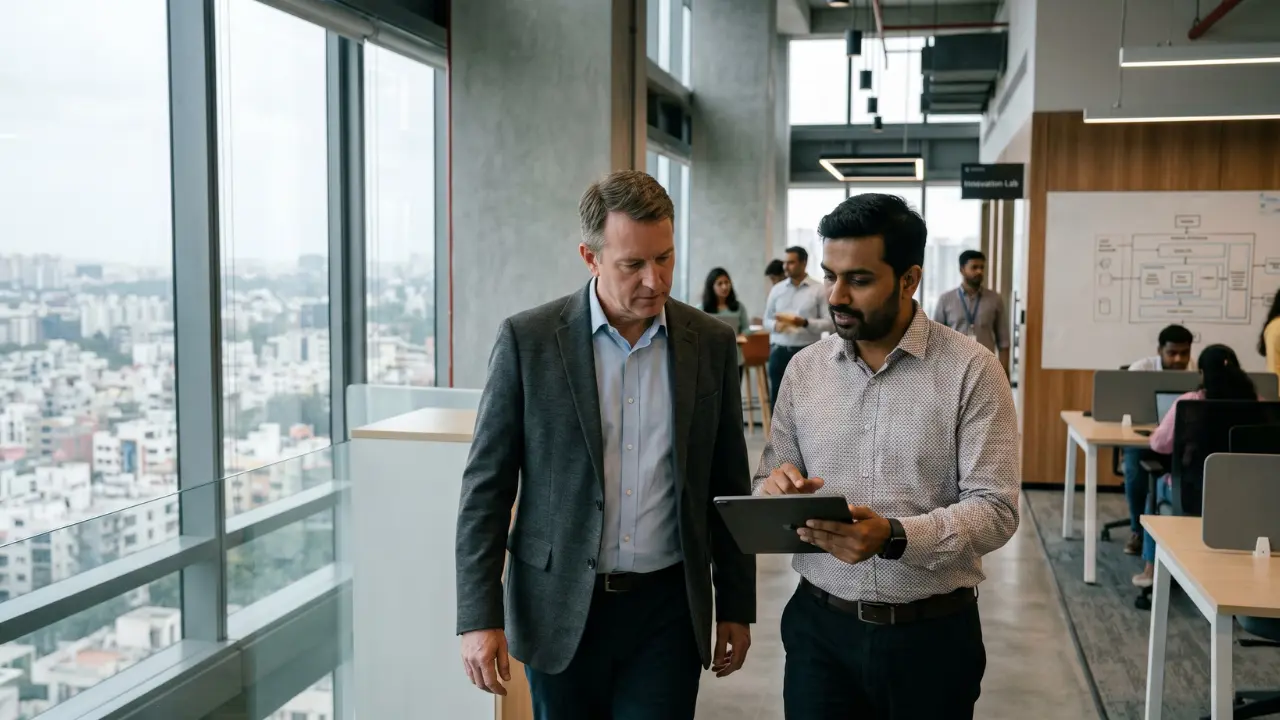
For enterprise leaders and CTOs, "Claude for Creative Work" triggers an immediate reassessment of creative outsourcing budgets and Global Capability Center (GCC) allocations. Traditional offshore production hubs in India have long relied on billing for high-volume, repetitive tasks—such as batch asset processing, rote 3D scaffolding, and manual file formatting.
With Anthropic natively automating these tedious workflows inside industry-standard tools, the necessity for massive offshore production factory retainers is drastically diminished. The introduction of "Claude Design" by Anthropic Labs acts as an additional accelerant to this offshore operational shift.
By enabling autonomous exploration and rapid handoff of software experiences directly to platforms like Canva, the initial UI/UX wireframing process is compressed from weeks to minutes. For enterprises, this means shifting payroll away from manual asset generation and reallocating it toward strategic creative direction and similar forms of cross-app agentic orchestration.
However, C-suite executives must also navigate the hidden compliance and FinOps realities of these powerful integrations. Enabling deep LLM access to proprietary CAD files in Autodesk Fusion or unreleased corporate branding assets requires rigorous API governance and data fencing. While the operational ROI of eliminating manual toil is undeniable, enterprises will need to overhaul their security posture to ensure that autonomous agents executing procedural changes do not inadvertently expose sensitive intellectual property.
Frequently Asked Questions
What is the Blender MCP connector for Claude?
The Blender MCP connector is an open-source integration that allows Claude to interact with Blender's Python API through natural language prompts. This enables the AI to debug 3D scenes, batch-apply procedural changes, and build custom tools directly within the Blender interface.
How does Claude Design integrate with Canva?
Claude Design is a new tool developed by Anthropic Labs meant for rapidly exploring and iterating on software experiences. It is specifically built to export visualized prototypes and design options directly into Canva for further refinement and enterprise deployment.
Which creative software platforms are partnering with Anthropic?
Anthropic launched "Claude for Creative Work" with a massive coalition of major creative industry partners. The initial integration suite includes direct connectors for Adobe, Autodesk Fusion, Blender, Ableton, Affinity by Canva, Resolume, SketchUp, and Splice.